
How to Prevent Underwear Pilling: Wash, Dry and Buy Smarter
You can reduce underwear pilling a lot, but you can’t eliminate it with laundry alone. Pills form when friction tangles loose surface fibers, so the fix is two-sided: cut the abrasion in your wash and wear routine, and start with fabric that is built to resist it. Turn pairs inside out, wash with like items, don’t overload the machine, and skip high heat. Then judge your next pair by its fiber and knit, not its price tag.
TL;DR
- Pilling is caused by abrasion tangling short, broken surface fibers into small balls. It is a friction problem first.
- Wash underwear inside out, in a half-full machine, on a gentle cycle, with similar fabrics. Air-dry or use low heat.
- Laundry has limits: pilling propensity is also set by fiber, yarn, knit and finishing, so some of it is baked in before you buy.
- Pilling alone does not prove a pair is poorly made, but heavy pilling after a few weeks is worth noting when you shop again.
- Remove existing pills gently with a lint roller, a light pass of a fabric shaver, or small scissors. Never pull them.
Table of Contents
- What actually causes underwear to pill
- How to wash underwear so it pills less
- Drying: air-dry or go low
- A quick routine you can follow
- Which fabrics pill more, and which less
- Does pilling mean your underwear is poor quality?
- How to remove pills you already have
- Prevent fit problems that cause friction
- Our perspective
- A pair built to stay in place
- What to check before you buy your next pair
- FAQ
- Sources
What actually causes underwear to pill
A pill is a tiny ball of fiber on the surface of fabric. Pills appear when groups of short, broken fibers tangle together, and the testing company that explains this describes the process as the result of abrasion, not a fabric defect.
The academic work on this goes back decades. Gintis and Mead found that how much a fabric pills depends on three rates: how fast fuzz forms on the surface, how fast that fuzz entangles into balls, and how fast the finished pills wear off. Fuzz forms, tangles, grows, and eventually sheds. If fuzz forms quickly and pills hang on, you see them. If pills snap off as fast as they form, you never notice.
Underwear is one of the hardest-working garments you own. It rubs against your skin, your pants, a belt, a car seat and a chair for hours. Then it goes through a washer, where it rubs against everything else in the drum. That is a lot of abrasion in a small garment, and the high-friction zones (inner thighs, the seat, the waistband edge) are where pills show up first.

It is not only your laundry habits
This is the part most laundry guides skip. CottonWorks, a fabric industry resource, says pilling is influenced by fiber type or blend, fiber dimensions, yarn and fabric construction, finishing, and end use. It describes the underlying propensity as mainly a materials and manufacturing matter, not simply a laundering mistake, and says controlling it has to begin in the product’s material specification and mill processing.
A controlled study of cotton and spandex knits pointed the same way. Researchers found that tumble drying did not significantly increase pilling or fuzzing compared to air drying, which suggests some pilling problems start at manufacturing rather than at home.
The honest takeaway: good washing habits lower your odds, and they matter most on a well-made fabric. They will not rescue a loosely constructed knit.
How to wash underwear so it pills less
Every step below does one job: reduce rubbing between the fabric surface and anything else. Here is the routine, in order of impact.
1. Turn pairs inside out
This is the most repeated tip across laundry guides, and it holds up. Turning underwear inside out protects the outer surface from abrasion against other items, zippers and buttons. The side that takes the friction is the side nobody sees. For boxer briefs, that means the outside surface stays smooth while the inner face does the scuffing.
2. Don’t overload the washer
A packed drum means more fabric pressed against more fabric. Whirlpool recommends avoiding an overloaded washer, along with cold, gentle washing, fastening zippers and buttons, and sorting by fabric type. A loose load lets garments move freely and lets water do the cleaning instead of other clothes. Aim for a drum that is about half to two-thirds full.
3. Wash with similar fabrics
Sort by fabric type, not just by color. Washing underwear with jeans, hoodies, towels or anything with hardware turns the drum into sandpaper. If you are tempted to toss everything together, our guide on washing underwear with towels explains what to do instead.
4. Choose a gentle cycle and cold or cool water
A delicate cycle cuts agitation, and agitation is friction. Vogue’s care advice, drawn from a designer’s view that abrasion is the central mechanism, is to use a mild detergent and a delicate cycle without overloading, wash less often when appropriate, and turn garments inside out.
Washing less often is realistic for jeans, less so for underwear. Don’t skip hygiene to save fabric. The lever you do control is how hard each wash is.
5. Consider a cellulase detergent for cotton
Cellulase is an enzyme that breaks down loose cotton fibers. UL’s guidance says that a detergent containing cellulase helps break down and remove cotton pills. Check the label of your detergent; not every brand lists enzymes. This applies to cotton and cotton-rich knits, so don’t expect it to do much for synthetics.
6. Be careful with fabric softener
Softener seems like it should help, since it makes fabric feel smoother. The evidence is mixed. One academic study found that some types of softeners may worsen pilling performance in polyester/viscose blends. Softener can also coat stretch fibers and affect how they perform. We cover this in detail in why to skip fabric softener for underwear, except 100% cotton.
Drying: air-dry or go low
Heat and tumbling both stress fabric, and tumbling adds more rubbing. The common advice from Whirlpool and Vogue is to air-dry, or use low heat if you use a dryer.
The cotton/spandex study above adds a useful nuance: in a controlled test, the dryer was not the main driver of pilling. So if you machine-dry, low heat is a sensible compromise, and the bigger payoff comes from the wash. High heat is still worth avoiding because it is hard on elastic fibers and the fit that depends on them. For the full routine that keeps stretch and shape, see our guide to washing premium boxer briefs to keep the fit.
A quick routine you can follow
| Step | Do this | Why it helps |
|---|---|---|
| Sort | Wash underwear with similar light fabrics | No hardware or rough textures to rub against |
| Prep | Turn pairs inside out | Outer surface avoids abrasion |
| Load | Fill the drum about half to two-thirds | Garments move instead of grinding |
| Cycle | Gentle or delicate, cold or cool water | Less agitation, less friction |
| Detergent | Mild, ideally with cellulase for cotton | Clears loose cotton fibers |
| Dry | Air-dry or tumble on low | Less heat and tumbling stress |
Which fabrics pill more, and which less
Construction matters as much as fiber, so treat these as tendencies, not guarantees.
Short fibers pill more. Maytag notes that shorter fibers like cotton, wool, polyester and other synthetics are more prone to breakage and pilling than longer fibers such as linen and silk. Whirlpool adds that looser and knitted fabrics tend to pill more than tightly woven, durable ones, and that some pilling is always possible with wear.
Knit is the norm in underwear. Almost all boxer briefs are knit, because knit stretches. That is a trade: stretch and comfort in exchange for a surface that is somewhat easier to scuff than a woven shirt fabric. The difference between a well-made knit and a loose one is yarn quality, knit density and finishing, which is exactly where CottonWorks puts the cause.
Blends can trap pills. A common explanation for blended fabrics is that stronger fibers hold onto the broken ends of softer ones, so pills stay on the surface instead of falling away. That is why a blend can pill more than either fiber alone, and why the details of the blend and the yarn matter.
For a deeper look at fibers, our guides to modal versus cotton for men who sweat, micromodal versus modal and nylon versus polyester cover how each behaves day to day. If you want the broader buying checklist, start with what to check in men’s underwear: fiber, elastane and fit.

Does pilling mean your underwear is poor quality?
Not necessarily. Wirecutter reports that most fabrics can pill with repeated wear, and pilling does not always mean low quality.
But speed matters. When Wirecutter tested underwear, it found noticeable pilling on some pairs after just a few weeks of wear, even though testers followed the washing instructions. A little fuzz at the seat after six months is ordinary. Visible balls after a few weeks of careful washing points to the fabric, not to you.
A simple rule: if a pair pills quickly despite gentle care, don’t buy it again, and don’t blame your washer.
How to remove pills you already have
Pilling can’t be truly reversed, because the damaged fibers have already loosened and tangled. You can improve how it looks, though. Go from gentlest to most aggressive:
- Lint roller. Good for loose pills sitting on the surface.
- Small scissors. Snip individual pills carefully. Never pull them, because pulling drags more fiber out.
- Fabric shaver. Use it very lightly on a flat garment, on a light setting, with minimal pressure, and avoid seams and thin areas.
Wirecutter cautions that shaving is inherently somewhat damaging, so use it sparingly. A fashion school professor quoted in that piece suggests roughly once or twice a year per garment. Test any method on an inconspicuous spot first. With underwear, thin stretch fabric is easy to nick, so if the pilling is widespread, replacing the pair is often smarter than shaving it.
Prevent fit problems that cause friction
Pilling isn’t only about the wash. Underwear that shifts all day rubs more, and rubbing is the cause. A leg band that rides up bunches against your thigh and scuffs the same patch of fabric over and over. Seams and tags add their own friction points. Our pieces on fixes when underwear rides up and relieving seam irritation show how fit and construction change how a pair wears. If a pair needs constant adjusting, it is both less comfortable and getting more friction than it should.
Our perspective
We make boxer briefs, so we see this question from the design side. Most advice on pilling treats it as something you do wrong in the laundry room. We think that is only half true. Washing gently matters, and we recommend the routine above for every pair you own, ours included.
But the biggest friction in underwear isn’t in the washer. It is the leg band that creeps up, the tag that scratches, the seam that digs in. That is why we built the Contour Signature Boxer Brief around a non-rising leg that stays in place, a tagless finish, and four-way stretch that moves with you. A pair that stays put rubs against itself and your clothing less, and that is where wear starts.
We won’t promise any underwear is pill-proof, because no honest maker can. What we can say is what to look for: fabric that feels smooth and dense, a fit that doesn’t need adjusting, and a pair that holds its shape after repeated washes. Judge any brand, including ours, on that after a month of normal wear and washing.
— Tim
A pair built to stay in place
If you are replacing pairs that pilled or kept shifting, the Contour™ Signature Boxer Brief is $19.99. It has a non-rising leg, a tagless design, ultra-soft four-way stretch and breathable, lightweight fabric, and it is made to keep its fit and softness wash after wash. Multipacks are available, and we offer free worldwide shipping options.
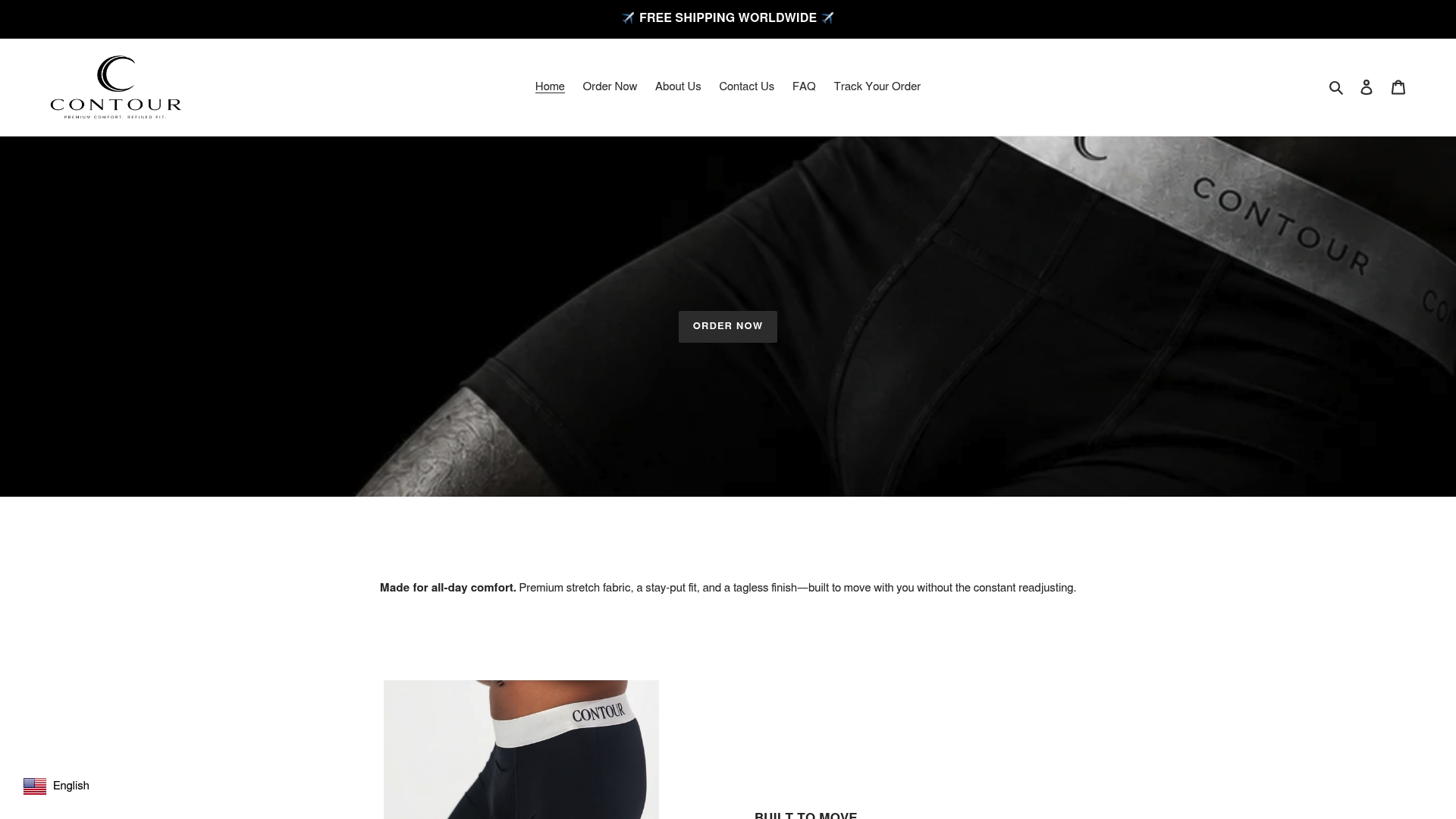
Pair it with the wash routine above and you give any boxer brief the best chance to stay smooth. You can see sizes and bundles on the Wearcontour site.
What to check before you buy your next pair
You can’t feel pilling resistance in a store photo, but you can narrow the odds.
- Fiber and blend. Check the label. Knowing the fiber and the elastane share tells you how the pair will stretch and wear.
- Feel of the surface. Smooth, dense fabric with little visible fuzz usually resists scuffing better than a fuzzy or loose-feeling knit.
- Fit and leg design. A leg that stays put and a tagless finish remove friction points.
- Care label. If it demands hand washing or special handling for everyday underwear, that is a poor match for real life.
- Reviews after weeks, not days. Look for comments about how a pair looks after multiple washes.
For more on durable fibers, see our look at six underwear materials that last.
FAQ
How can I prevent my underwear from pilling?
Wash pairs inside out, with similar fabrics, in a drum that is not overloaded, on a gentle cycle. Use a mild detergent, and air-dry or tumble on low. These steps cut abrasion, which is what creates pills.
Does pilling mean bad quality?
Not always. Most fabrics pill with repeated wear, according to Wirecutter. Heavy pilling within a few weeks of careful washing is a stronger warning sign, since construction and finishing largely set how much a fabric pills.
Can pilling be reversed?
Not truly, because the fibers have already loosened and tangled. You can improve the look with a lint roller, careful snipping with small scissors, or a very light pass of a fabric shaver. Never pull pills off by hand.
Does the dryer cause underwear pilling?
It can add friction and heat, but a controlled study of cotton and spandex knits found tumble drying did not significantly increase pilling compared to air drying. Air-drying or low heat is still the gentlest choice for stretch and fit.
Do cotton or synthetic boxer briefs pill less?
Neither wins outright. Short fibers, whether cotton or synthetic, break and pill more easily than long ones, and knit density, yarn and finishing matter as much as the fiber name.
Sources
- Untangling the How, What and Why of Textile Pills (UL)
- Garment Durability (CottonWorks)
- The Mechanism of Pilling (Gintis and Mead, 1959)
- Comparison of Test Procedures, comfort stretch knit fabrics (Ankenman, 2006)
- How to Remove Pilling From Clothes (Vogue)
- What Is Fabric Pilling & How to Prevent It (Whirlpool)
- How to Prevent & Remove Fabric Pilling (Maytag)
- Effect of different softeners on pilling performance of polyester/viscose blends
- Read This Before You Take a Fabric Shaver to Your Favorite Clothes (Wirecutter)
- You Probably Don’t Need Zinc in Your Underwear (Wirecutter)