
Keep the Fit for 100 Days: Washing Premium Boxer Briefs Right
Wash boxer briefs after every wear on a gentle or delicate cycle using cold or warm water and a mild detergent, then air-dry when you can. Hand-wash anything especially delicate, and save hot water for sanitizing after an illness or heavy soiling. Both CDC laundering guidance and the American Cleaning Institute back this up, and it’s exactly the kind of gentle routine Wearcontour designs its briefs to survive.
TL;DR:
- Washing boxer briefs in cold or warm water on a gentle cycle preserves fabric elasticity and prevents unnecessary stress on stretch fibers.
- Hand-washing delicate materials like lace, silk, or stretch blends is the gentlest method and can be effectively done with a basin, mild detergent, and careful rinsing.
- Turning boxer briefs inside out, sorting by color, and using mesh bags for delicate or engineered fabrics significantly reduce wear and prolong their lifespan.
- Air-drying, either by hanging or laying flat, is the best method to maintain elasticity and shape, while high heat in dryers accelerates fabric and elastic breakdown.
- Underwear should be washed after every wear, including new pairs, with sanitizing cycles and higher temperatures reserved for illness, heavy sweating, or shared laundry situations.
Table of Contents
- How Do You Hand-Wash Boxer Briefs?
- What’s the Right Machine Setting for Washing Boxer Briefs?
- How Do You Pre-Treat Stains and Remove Odors?
- What’s the Best Way to Dry Boxer Briefs?
- How Often Should You Wash Boxer Briefs?
- What Habits Make Premium Boxer Briefs Last Longer?
- How Does Wear Contour Design for This Kind of Care?
- Why Gentle, Consistent Care Beats Occasional Deep Cleaning
- Get Boxer Briefs Built to Handle This Routine
- Sources
- FAQ
How Do You Hand-Wash Boxer Briefs?
Hand-washing makes sense for anything with lace trim, silk panels, or a stretch blend you’re not ready to trust to a machine yet. It’s slower than tossing a load in the washer, but it’s also the gentlest option you have, and it takes less time than most guys assume.
Start by gathering a clean basin, cool or lukewarm water, and a small amount of mild liquid detergent. Skip powder detergent for hand-washing, as it dissolves less evenly and can leave residue trapped in stretch fibers.
- Fill the basin with water and stir in the detergent until it’s fully dissolved.
- Submerge the boxer briefs and gently agitate them with your hands for about a minute, focusing on the waistband and gusset.
- Rub any visibly soiled spots gently between your fingers rather than scrubbing hard.
- Drain the soapy water and refill with clean water to rinse, repeating until no suds remain.
- Press the water out by squeezing, never wringing or twisting the fabric.
- Reshape the garment while it’s damp, then lay it flat or hang it to dry away from direct heat or sunlight.
Pro Tip: Traveling with only two or three pairs? Hand-wash in the sink at night with a travel-size detergent packet, and they’ll be dry enough to wear again by morning if you press out as much water as possible before hanging them.
What’s the Right Machine Setting for Washing Boxer Briefs?
Turn boxer briefs inside out before they go anywhere near the washer. It protects the outer fabric and any printed logos from friction against zippers, buttons, and rougher fabrics in the same load. Sort by color while you’re at it. Dark dyes bleeding onto lighter waistbands is a preventable annoyance.
For anything with real stretch or delicate seams, a mesh laundry bag is worth the two dollars it costs. Laundry experts commonly recommend gentle cycles and mesh bags specifically to keep delicates from stretching out or snagging against zippers and heavier garments.
Set the machine to a delicate or gentle cycle and stick with cold or warm water, generally in the low to moderate temperature range, for regular loads. This range is where enzyme detergents perform best at lifting stains and bacteria without stressing elastic fibers.
Reserve hot water at higher temperatures for sanitizing after illness or heavy contamination. High heat sanitizes effectively but accelerates elastic breakdown, so it’s a special-occasion setting, not a default.
A quick note on detergent: if you have a high-efficiency washer, use an HE-labeled detergent and measure it carefully. Overdosing leaves residue that can dull fabric performance over time, according to the Cleaning Institute’s detergent guidance. Skip fabric softener entirely on stretch and moisture-wicking fabrics.
- Turn garments inside out before washing.
- Sort by color and fabric weight.
- Use a mesh bag for anything delicate or heavily engineered.
- Choose the delicate or gentle cycle, cold or warm water.
- Save 60°C+ water for sanitizing, not everyday loads.
Cold water isn’t a compromise. Heating water accounts for most of a washing machine’s energy use per load, and modern enzyme detergents clean just as effectively in cold or warm water. You’re not sacrificing hygiene by skipping the hot setting for routine loads.
How Do You Pre-Treat Stains and Remove Odors?
Spot-treat before the whole item goes into the wash, not after. Apply an enzyme-based pretreater or a dab of undiluted mild detergent directly to the stain and let it sit for 10 to 15 minutes before washing as usual.
Oxygen-based bleach is safe for white or heavily soiled items and won’t strip color the way chlorine bleach does. Skip chlorine bleach entirely on colored or high-stretch fabrics. It breaks down elastic fibers and fades dye fast.
For lingering odor, a short soak works better than harsh chemicals:
- Soak in cool water with enzyme detergent for 15 to 20 minutes before the regular wash.
- A diluted vinegar soak (about a quarter cup per gallon of water) also cuts odor without damaging fibers.
- Run a sanitizing cycle only if odor persists after a normal wash, and only if the care label allows higher heat.
- Avoid abrasive scrubbing, strong solvents, or repeated stain-remover applications. Engineered stretch fabrics wear thin faster under that kind of treatment than plain cotton does.
What’s the Best Way to Dry Boxer Briefs?
Air-drying wins for longevity. Hang boxer briefs or lay them flat away from direct sunlight, and reshape them while they’re still damp so the waistband and leg openings dry to their intended shape rather than whatever position they landed in.
- Squeeze out excess water gently after the wash cycle finishes.
- Reshape the garment immediately, straightening the waistband and leg seams.
- Hang on a drying rack or lay flat on a clean towel, out of direct sun.
- If you must use a dryer, select low heat and remove the load as soon as it’s dry, not after an extra cycle “to be safe.”
Overdrying on high heat is one of the fastest ways to wear out elastic. Air-drying prevents the kind of heat-driven fabric breakdown that shows up as a waistband that no longer snaps back.
Skip dryer sheets along with fabric softener. Both leave a coating that reduces breathability on moisture-wicking blends.
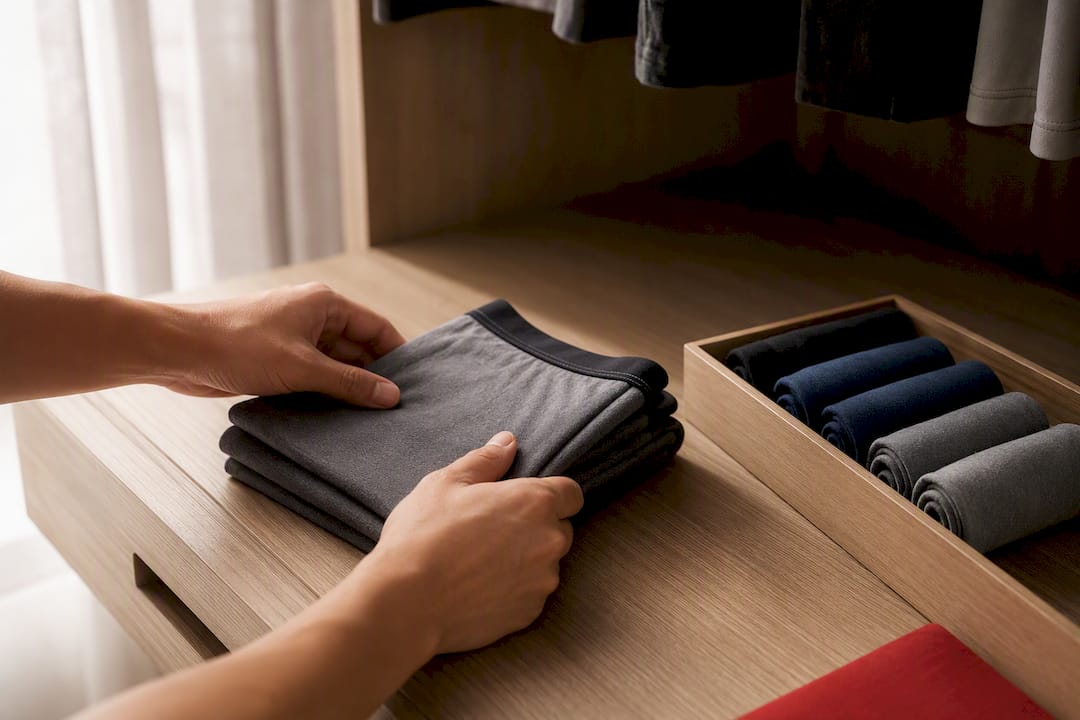
Pro Tip: Fold boxer briefs flat rather than balling them into a drawer. Rolling works too, and either method keeps elastic from creasing in one spot over months of storage. Rotate through your pairs instead of wearing the same two or three on repeat. It spreads out wear evenly across your whole rotation.
How Often Should You Wash Boxer Briefs?
Wash after every single wear. The American Cleaning Institute’s guidance is unambiguous on this point, and it’s not a suggestion you should treat loosely just because a pair “looks clean.”
New underwear needs a wash before its first wear, too. Manufacturing and packaging leave behind residues you don’t want against your skin on day one.
Certain situations call for stepping up the sanitizing:
- After illness, run a hotter cycle or use oxygen bleach if your care label allows it.
- After unusually heavy sweating (long workouts, hot climates), a same-day wash beats letting sweat sit in the fabric overnight.
- If you’re sharing laundry facilities, a sanitizing cycle adds a layer of caution worth taking.
- Traveling with limited laundry access? Pack enough pairs for the trip, or plan a quick hand-wash rather than stretching one pair across multiple days.
What Habits Make Premium Boxer Briefs Last Longer?
Check the care label before you do anything else. It overrides every general tip in this guide, because care symbols are standardized and specific to that exact fabric blend. A high-stretch blend and a plain cotton pair don’t always tolerate the same settings.
Beyond the label, a handful of small habits add real years to a pair’s life:
- Stick with cold or warm enzyme detergents and skip fabric softener on stretch fabrics.
- Limit high-heat cycles to genuine sanitizing situations, not routine loads.
- Turn garments inside out and use a mesh bag for delicate loads.
- Rotate through several pairs rather than running the same two through the wash twice a week.
- Buy the correct size. A boxer brief that’s stretched too tight across the waistband breaks down faster than one that fits properly, since constant overstretching fatigues elastic fibers.
Pro Tip: If you’re not sure whether a pair runs true to size, check the brand’s size guide before you buy multiples. Guessing on sizing is the fastest way to end up with underwear that stretches out within a few months no matter how carefully you wash it.
How Does Wear Contour Design for This Kind of Care?
The Contour™ Signature Boxer Brief is built around a non-rising leg that stays put through a full day of movement, a tagless finish for smoother skin contact, and a breathable four-way stretch fabric. The boxer briefs are designed with stretch fabric intended to hold its shape through repeated washing rather than sagging out quickly.
That durability claim only holds up if the washing matches the fabric. The same routine covered above applies directly: delicate or gentle cycle (or hand wash for extra caution), cold or warm water, no fabric softener, and air-drying whenever your schedule allows it.
A few practical notes for anyone building out a rotation:
- Check the size guide before ordering multiples. The right fit reduces the kind of fabric stress that shortens elastic life.
- Shipping and returns details live on the product page if you’re comparing single pairs against a bundle.
- Product reviews on the Wearcontour site indicate fit retention after repeated washes as a noted feature.
Why Gentle, Consistent Care Beats Occasional Deep Cleaning
Underwear takes more daily wear than almost anything else in a closet, yet it gets the least thought at laundry time. A boring, consistent routine, cold water, gentle cycle, air-dry when possible, does more for comfort and lifespan than any occasional “deep clean” ever will. Check the label, skip the softener, and let the fabric do what it was engineered to do.
— Tim
Get Boxer Briefs Built to Handle This Routine
Most boxer briefs lose their shape within a few months of regular washing, even when you follow every step above. Wearcontour built the Contour™ Signature Boxer Brief specifically to resist that decline. The non-rising leg design and tagless construction hold up through the gentle cold-water washing and air-drying this guide recommends, so the fit you get on day one is closer to the fit you still get on day 100.
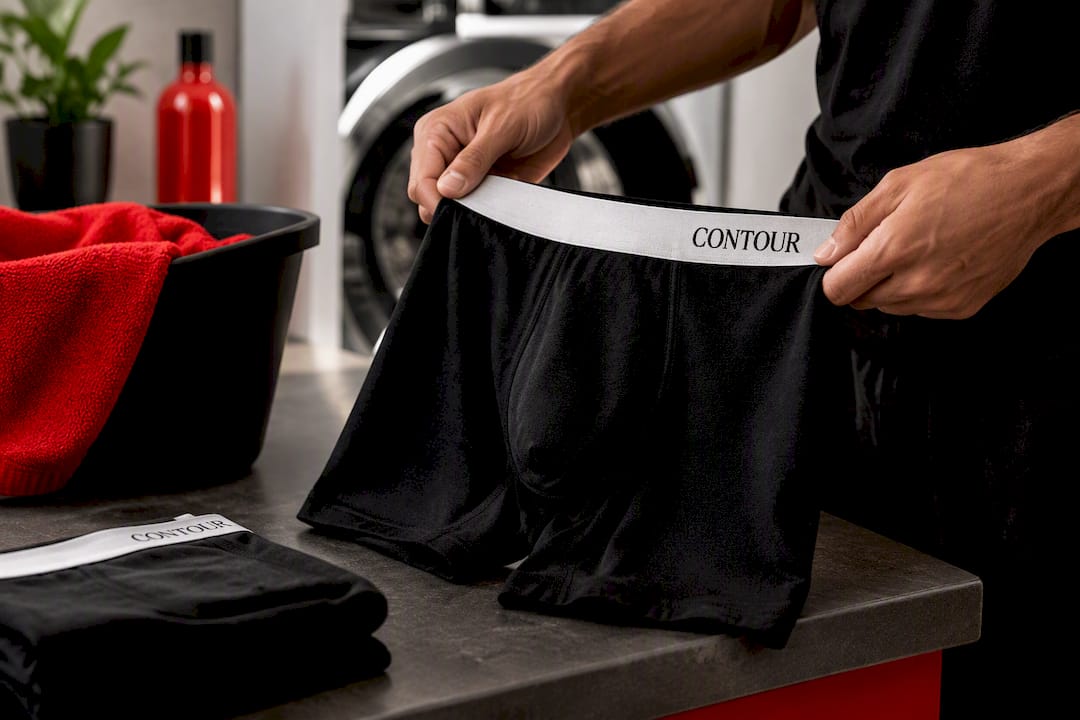
A single Contour™ Signature Boxer Brief runs $19.99, with multipack bundles available if you’re ready to build out a full rotation and cut down on how often any one pair goes through the wash. Free worldwide shipping applies to orders, and the product page has sizing details if you’re not sure which fit to start with. Check the size guide and place your order today.
Sources
- Laundry basics: Do I need to wash my clothes?
- Laundry and Bedding | Infection Control
- How to wash underwear: simple steps from laundry experts
FAQ
Should You Wash Boxer Briefs Before Wearing Them?
Yes, wash new underwear before the first wear. Manufacturing, packaging, and warehouse storage leave behind residues and dust that shouldn’t sit against skin on day one, so a quick gentle-cycle wash beforehand solves that.
Is It Healthier to Sleep Without Underwear?
Going without underwear at night lets skin breathe more freely for some men, but it’s a personal comfort choice rather than a strict hygiene requirement. Whichever you choose, washing whatever you do sleep in regularly matters more than the choice itself.
Do Boxer Briefs Shrink in the Wash?
Cotton-heavy boxer briefs can shrink slightly with hot water or high-heat drying, while high-stretch engineered fabrics like the one in the Contour™ Signature Boxer Brief are built to hold their shape through repeated gentle washing. Sticking to cold or warm water and air-drying minimizes shrinkage risk across fabric types.
How Often Should Boxers Be Washed?
Wash boxers and boxer briefs after every wear, according to American Cleaning Institute guidance. Skipping washes to save laundry time trades short-term convenience for bacteria buildup and faster fabric breakdown.