
Skip the Six Month Panic: 7 Signs to Replace Underwear
Most guidance settles on 6 to 12 months, or roughly 50 washes, as a rough starting point. But the number matters far less than the pair in your hand right now. If the elastic has gone slack, a seam is fraying, or you can’t wash out a stain or an odor, that pair is done today, no matter how new it is. Good laundering habits and a decent rotation size will stretch that window considerably.
TL;DR:
- The actual lifespan of underwear varies significantly based on wear, washing habits, and fabric quality, often exceeding the six to twelve months guideline.
- Signs indicating it’s time to replace underwear include holes, loss of elasticity, seam fraying, persistent odor, and uncomfortable fit or irritation.
- Regularly inspecting your entire drawer annually and replacing only pairs that show real damage avoids unnecessary waste and expenses.
- Proper laundering methods, such as washing in cold water and air drying, can extend the integrity of underwear and delay replacement.
- Well-designed underwear, like the Contour™ Signature Boxer Brief, aims to resist common wear points, reducing the frequency of early replacements.
Table of Contents
- When To Replace Underwear: What The Common Intervals Actually Mean
- Clear Signs It’s Time To Throw Underwear Away
- Factors That Shorten Underwear Lifespan
- How To Extend The Life Of Underwear
- Plan Your Restock: How Many Pairs To Own And When To Audit
- How Wearcontour’s Design Choices Cut Down On Replacement
- What About Weight Changes, Pregnancy, And Body Changes?
- A Practical Way To Think About Replacing Underwear
- A Boxer Brief Built To Skip The Six Month Panic
- Sources
- FAQ
When To Replace Underwear: What The Common Intervals Actually Mean
The “6 to 12 months” rule you’ve probably seen everywhere didn’t come from nowhere, but it is softer than it sounds. Some coverage attributes a general window of several months to doctors commenting on the topic, while other guidance suggests a range depending on how often you wear and wash a given pair. The Guardian’s reporting on this exact question found the evidence behind those numbers is thinner than the confident headlines suggest. It’s a rule of thumb, not a medical standard.
Clinicians pushed back hard against rigid claims to replace underwear on a strict six-month schedule. TODAY’s reporting quoted experts saying there’s no strict calendar rule at all. Their actual advice: keep underwear clean and dry, and replace it when it shows damage or when it’s causing irritation, not on a fixed schedule.
If you’d rather track something concrete than guess at months, count washes instead. A commonly cited benchmark is a certain number of wash cycles, which can be helpful if you track laundry loads or rotate a fixed number of pairs. It sidesteps a problem with calendar rules: two men who each own their underwear for exactly six months can have wildly different wear on it depending on how often they actually put it on.
That’s really the crux of it. A calendar date treats every pair the same regardless of how it’s actually used. Three variables change the real answer:
- Rotation size. A drawer of 20 pairs sees each one washed far less often than a drawer of seven.
- Wash frequency and heat. Daily hot-water washing ages fabric faster than a gentler weekly routine.
- Activity level. Sweat, friction, and heavy movement break down elastic and fibers faster than a mostly sedentary week.
GQ’s guide to underwear shopping recommends treating the whole drawer as due for an annual audit rather than replacing pairs piecemeal whenever you think of it. That single habit, checking everything once a year, does more for your comfort than memorizing any specific month count.
Clear Signs It’s Time To Throw Underwear Away
Skip the math and check the garment itself. These are the signals that actually matter, ranked roughly by how urgently they should push you to toss a pair.
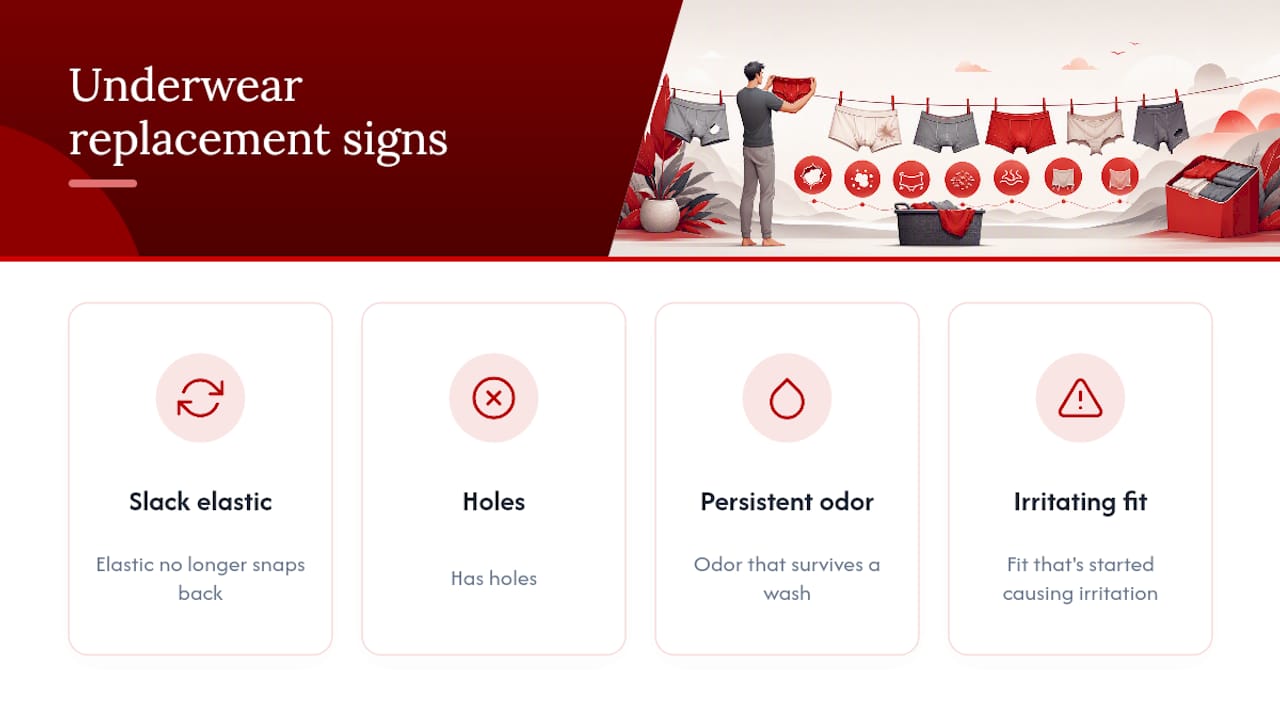
- Holes or thinning fabric. Any visible hole, or fabric so thin you can see light through it, means the material has broken down structurally. It won’t get better with one more wash.
- Lost elasticity in the waistband or legs. If the waistband no longer snaps back after you stretch it, or the leg openings sag and roll instead of staying put, the elastic fibers are done. This is usually the first thing to fail, often well before the fabric itself wears out.
- Seam separation or fraying threads. A seam pulling apart at the crotch or hip means the garment is a few wears from a bigger tear.
- Persistent odor after washing. If a normal wash cycle can’t fully clear the smell, bacteria have worked into the fibers deeply enough that regular detergent isn’t reaching it.
- Stains that won’t lift. Sweat, discharge, or other stains that survive a wash aren’t just a cosmetic issue. They often mean bacteria or residue are embedded in the fabric.
- Bunching, rolling, or chafing. Comfort problems, not just hygiene ones, are valid reasons to retire a pair. Fabric that constantly bunches or rides up has likely lost its shape for good.
- Recurrent irritation or infections. If you notice repeated skin irritation, rashes, or infections that seem tied to specific pairs, stop wearing them immediately. Doctors interviewed by TODAY point to damp, poorly ventilated, or irritant-holding fabric as a real risk factor, separate from any calendar-based advice.
Pro Tip: Once a year, grab the waistband and one leg opening on every pair and stretch each one by hand. If it doesn’t snap back to close to its original size within a second or two, that pair goes in the toss pile regardless of how “new” it looks.
Factors That Shorten Underwear Lifespan
Fabric choice sets the ceiling on how long a pair can realistically last. Pure cotton is breathable and soft, but it loses elasticity faster than blends, especially around the waistband, because cotton itself has no stretch memory. Modal holds shape somewhat better and drapes softly, but it can thin out with aggressive washing. Nylon and spandex blends generally hold their shape longest because the spandex content is engineered specifically to resist fatigue, though even the best blend eventually breaks down under enough heat and friction.
Laundering habits do more damage than most people realize.
- Hot water breaks down elastic fibers faster than cold or warm water, which is a big reason waistbands go slack early.
- High heat drying compounds the problem, since dryer heat is often more damaging to elastic than the wash cycle itself.
- Harsh detergents and bleach strip fabric finishes and weaken fibers over repeated cycles, even when the garment looks fine.
Consumer shopping guides consistently point to the same conclusion: the more a garment gets worn and washed, the faster it wears out, which sounds obvious until you realize how much control you have over both variables. A small rotation forces frequent washing on the same handful of pairs, compounding wear.
Shapewear and compression garments deserve a special note here. Their tighter, more elastic-dependent construction means they generally need replacing sooner, often in the three to six month range, because the stretch itself is doing more structural work than in standard underwear and fatigues faster under repeated use.
How To Extend The Life Of Underwear
Small changes to your laundry routine buy real time before any pair hits the signs above.
- Wash in cold water on a gentle cycle. Cold water is far less aggressive on elastic fibers and dyes than hot water, and a gentle cycle reduces the mechanical stress on seams.
- Use a mild detergent and skip bleach. Harsher formulas strip the finishes that keep fabric soft and elastic supple.
- Air dry or hang dry when possible. Skipping the dryer entirely avoids the heat that ages elastic the fastest. When you do need the dryer, use a low-heat setting.
- Store pairs so elastic isn’t compressed or stretched. Folding rather than crumpling into a drawer reduces unnecessary strain over months of storage.
- Rotate evenly. Wearing the same three favorite pairs on repeat wears them out while the rest of the drawer barely gets touched.
Yahoo Shopping’s guide backs this up directly: laundry method, particularly cold water and hang drying, has a measurable effect on how long underwear holds its shape.
Pro Tip: If you own any delicate blends or anything with lace or fine trim, wash them inside a mesh laundry bag. It keeps them from snagging on zippers or getting stretched out by tumbling against heavier items like jeans or towels.
Plan Your Restock: How Many Pairs To Own And When To Audit
Your ideal rotation size comes down to how often you’re willing to do laundry. The number of pairs you own affects how often you need to do laundry and impacts how quickly they wear out: fewer pairs mean more frequent washing and faster wear, while a larger rotation extends garment life by reducing wash frequency.
GQ’s recommendation lands right in the middle of that range: a drawer of around 14 pairs balances convenience against unnecessary washing for most men, without requiring the closet space or upfront cost of a much larger rotation.
Once you’ve settled on a rotation size, build a simple annual habit around it:
- Set a fixed date once a year to pull every pair out of the drawer at once, rather than assessing them one at a time as you notice problems.
- Check each pair against the signs checklist, elastic snap, holes, stains, odor, and sort into keep or toss piles on the spot.
- Replace the toss pile in one batch rather than buying single replacements throughout the year, which usually means better pricing on multipacks.
- Reassess your rotation size if your laundry habits changed over the past year, more travel, a new gym routine, or a move to a place without in-unit laundry all shift the math.
Some brands offer subscription or scheduled restock options that handle this timing automatically, which can be worth considering if you’d rather not think about it at all.
How Wearcontour’s Design Choices Cut Down On Replacement
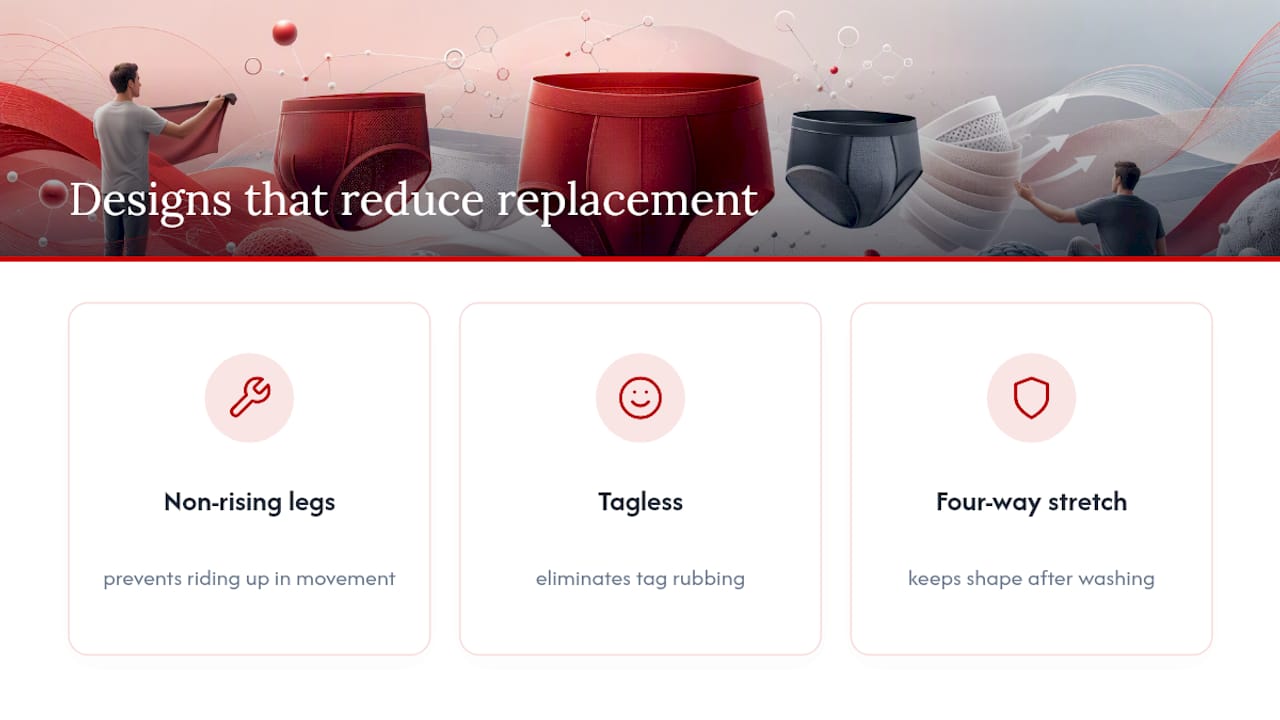
Most underwear fails in predictable places: the waistband loses its snap, the leg openings roll and bunch, or a tag rubs a spot raw until you give up on the pair entirely. The Contour™ Signature Boxer Brief is designed around those specific failure points. The non-rising leg design is engineered to stay put through movement instead of riding up, which addresses one of the most common comfort complaints that leads men to retire a pair early, not because it’s damaged, but because it’s annoying to wear.
Tagless construction removes another common source of irritation, since a rubbing tag is a frequent cause of skin discomfort that has nothing to do with fabric age. And the four-way stretch fabric is designed to hold its shape through repeated washing, targeting the elastic breakdown that ends most underwear’s useful life well before the fabric itself wears out.
Men who wear the same handful of pairs daily, or who stay active enough that fit and breathability matter more than the average wearer, tend to notice these differences fastest. Whatever brand you choose, run it through the signs checklist above at your next audit. Durable construction extends a pair’s life, but it doesn’t make it immune to wear forever.
What About Weight Changes, Pregnancy, And Body Changes?
Fit problems aren’t always about the fabric wearing out. Sometimes the underwear is fine and your body has simply changed. Weight gain or loss shifts how a waistband sits, and underwear that fit perfectly a year ago can suddenly dig in, ride up constantly, or leave visible marks by the end of the day, even though nothing about the garment itself has failed.
Pregnancy is the clearest version of this. As the body changes over months, standard waistbands often become genuinely uncomfortable or unsuitable well before any of the usual wear signs would show up. In that case, the honest move is to size up or switch styles rather than trying to make an ill fitting pair work through sheer stubbornness.
The practical rule: if you’ve gained or lost a noticeable amount of weight, or you’re pregnant, don’t wait for elastic failure to justify a resize. Persistent digging, rolling, or visible red marks after a normal day are fit problems, not durability problems, and they call for a different size, not necessarily a whole new brand or style. Checking your size guide before restocking saves you from buying a fresh batch in the wrong fit.
A Practical Way To Think About Replacing Underwear
The six month rule that circulates online is a decent memory jog, nothing more. Treat it as a nudge to go check your drawer, not a deadline you’ve failed if you miss it. The pairs that actually need to go are the ones showing real signs: slack elastic, holes, odor that survives a wash, or a fit that’s started causing irritation. Everything else can keep earning its spot.
I’d rather see someone do one honest audit a year than panic-replace a whole drawer because a headline said six months was up. That approach wastes money and creates unnecessary waste, especially when several pairs in that drawer are probably still in fine shape. If a pair has no holes, no odor, and the elastic still snaps back, it’s not going in the trash just because it’s a birthday older than some arbitrary number.
Underwear that’s still structurally sound but no longer your preferred fit is also worth donating rather than discarding, plenty of clothing donation programs accept gently used basics. Buy thoughtfully, check honestly, and let the garment tell you when it’s actually done.
— Tim
A Boxer Brief Built To Skip The Six Month Panic
Some companies address the replacement problem not by a better calendar rule, but by making underwear that doesn’t hit the usual failure points as fast. The Contour™ Signature Boxer Brief uses a non-rising leg that stays in place instead of riding up, a tagless finish that skips the rubbing that ruins a lot of otherwise good pairs, and four-way stretch fabric designed to hold its shape wash after wash instead of going slack early.
If your current rotation is full of pairs that bunch, roll, or dig in long before they’re actually worn out, that’s a fit and construction problem, not a hygiene one, and it’s exactly what this design targets. The Contour™ Signature Boxer Brief runs $19.99 per pair on Wearcontour’s site, with multipack bundles available if you’re planning a full drawer refresh. Check the size guide first if your fit has shifted at all, then place your order and start your next annual audit with a drawer that’s built to pass more of it.
Sources
- How Often Should You Buy New Underwear? | GQ
- Do we really need to replace our underwear every six months? | The Guardian
- Experts say no need to replace underwear every 6 to 9 months | TODAY
FAQ
Is it okay to wear the same underwear for four days without washing?
No. Wearing the same unwashed pair for multiple days lets sweat, skin cells, and bacteria build up, raising the risk of irritation and infection. Underwear should be washed after each wear regardless of how long you plan to keep the pair overall.
What is the average lifespan of a pair of underwear?
Most guidance points to roughly six to 12 months or around 50 wash cycles as a general estimate, though The Guardian’s review of the evidence found that range is more of a rough habit than a hard rule. Actual lifespan depends heavily on fabric quality, rotation size, and how the pairs are laundered.
When should I throw away underwear?
Throw a pair out when it shows real signs of wear: elastic that’s lost its snap, holes, seam damage, stains that won’t wash out, or odor that survives a full laundry cycle. Fit problems like constant rolling, bunching, or recurring irritation are equally valid reasons to retire a pair, even if it looks intact.
How often should you get a new pair of underwear?
Rather than fixing a strict date, most experts recommend an annual audit of your whole drawer, checking every pair against physical and hygiene signs, as GQ’s guide on the topic suggests. Underwear built with durable stretch fabric, like the Contour™ Signature Boxer Brief, is designed to hold its shape longer between that kind of audit, which can stretch the practical replacement window further than looser, less structured pairs.