
Stop Boxer Briefs from Riding Up for Men: Zone by Zone Fit Fixes
The correct fit is snug but never constricting: the waistband stays put without digging in, the pouch cradles without pinching, and the legs hug your thighs without leaving marks. Run two checks right now. Slide two fingers under the waistband. If they slip in easily, you’re loose; if they won’t fit at all, you’re too tight. Then do a slow squat. Everything should move with you, not against you.
TL;DR:
- The waistband should fit snugly at your natural waist or hip line, passing the two-finger test, and should not slide down or leave red marks during movement.
- The pouch must cradle without pinching or bunching, with contoured designs typically offering less movement and chafing than flat-front styles.
- Inseam length should cover about one-third of your thigh, with proper length preventing ride-up or bunching that can affect comfort and appearance.
- Fabric with genuine four-way stretch and strong recovery, combined with construction features like flat seams and a tagless finish, sustain fit over time and wash cycles.
- The Contour™ Signature Boxer Brief addresses common fit issues with a non-rising leg, elastic recovery, and breathable fabric, making precise measurements and fit tests essential before purchasing.
Table of Contents
- How Should Boxer Briefs Fit at the Waistband?
- What Does Proper Pouch Fit Feel Like?
- How Long Should the Inseam Be?
- Why Do Boxer Briefs Ride Up, and How Do You Stop It?
- Which Fabrics Actually Hold Their Fit?
- How Do You Measure Yourself for the Right Size?
- What Are the Sit, Squat, and Walk Tests?
- Common Boxer Brief Fit Problems and Quick Fixes
- How the Contour™ Signature Boxer Brief Solves Persistent Fit Problems
- Author Perspective and Quick Takeaways
- Get a Pair Built Around Everything Covered Here
- Sources
- FAQ
How Should Boxer Briefs Fit at the Waistband?
The waistband should land close to your natural waist or right at the hip line, roughly two to three inches above the hip bones, depending on your torso shape and personal preference. Some men prefer a higher rise that sits closer to the belly button; others like a lower cut that rides just above the hips. Neither is wrong. What matters is that the band stays anchored without you thinking about it.
The two-finger waistband test is the fastest way to check this. Slide two fingers under the elastic at your hip. A comfortable amount of resistance means the fit is right. If the band slides down when you walk or sit, it’s too loose. If it leaves red marks or makes it harder to take a full breath, it’s too tight, and that tension can bother you within an hour, not just by the day’s end.
Waistband width and elastic recovery matter more than most guys realize. A narrow, cheap elastic loses its snap after a handful of washes, which is why underwear that fit fine in March feels loose by June. Wider bands with better recovery distribute pressure evenly instead of concentrating it in one spot, which is also why they tend to stay comfortable through a full workday.
Activity changes what “right” feels like, too:
- For workouts or high-movement days, a slightly firmer waistband with strong elastic recovery keeps everything anchored during squats, lunges, or sprints.
- For all-day office wear, a softer, wider band that sits without pressure points matters more than aggressive hold, since you’re seated for hours.
- For hot climates or summer wear, breathable waistband construction reduces the sweat-and-slip cycle that makes bands feel like they’re failing when they’re actually just damp.
Pro Tip: Try the waistband test after you’ve been sitting for 20 minutes, not right after you put them on. A band that feels perfect standing up can dig in once you’re seated at a desk.
What Does Proper Pouch Fit Feel Like?
A well-fitted pouch cradles without compressing. That means there’s enough room that nothing feels flattened or squeezed, but not so much extra fabric that things shift around when you move. Under clothing, a properly fitted pouch creates a smooth, natural silhouette instead of an obvious bulge or a telltale empty pocket of fabric.
Testing this is simple. Reach in and check with your hand: there should be no pinching at the base, no fabric bunching uncomfortably, and no sense that you need to adjust the moment you stand up. If you find yourself repositioning within the first few minutes of wearing a new pair, the pouch is either too small or cut wrong for your shape.
Contoured pouches, as opposed to flat-front designs, reduce movement and chafing throughout the day, which matters most for men who are on their feet, active, or simply want to stop thinking about their underwear entirely. A flat-front cut can work fine for some body types, but many men find a contoured pouch noticeably more comfortable once they’ve tried both.
Here’s the decision that trips people up: do you size up the waist, or switch cuts entirely?
- If the waistband fits well but the pouch feels tight, try a different pouch design before sizing up the whole garment.
- If sizing up solves the pouch problem but leaves the waistband loose, that’s a sign the cut isn’t right for your proportions, not that you need a bigger size overall.
- If nothing in a standard lineup feels right, that’s usually a fabric or construction issue, not a sizing issue. More on that below.
How Long Should the Inseam Be?
Inseam length is where most men get it wrong, mostly because they’ve never actually thought about it. A useful rule of thumb: the inseam should cover roughly one-third of your thigh. For a lot of men, that typically falls within a moderate inseam length range. Shorter inseams, closer to a shorter length range, work better for men with shorter thighs or those who prefer a trunk-style cut that sits higher.
Height and thigh size both shift where that “one-third” mark actually falls. A taller man with long thighs might need a 7 inch inseam to hit the same proportional coverage that a 5 inch inseam gives a shorter man. Thigh circumference matters just as much: a muscular or larger thigh stretches the same inseam length differently than a lean one, which is why the same size can fit two men completely differently.
Getting the length wrong causes specific, avoidable problems:
- Too short, and the leg opening rides up into an uncomfortable line, especially when walking or climbing stairs.
- Too long, and excess fabric bunches at the thigh, which shows through fitted pants and creates friction points.
- Either extreme changes how your pants sit, since a hem line that peeks out or bunches under trousers throws off the whole silhouette.
The right inseam should disappear under your pants entirely. If you can see or feel it through your clothes, something’s off.
Why Do Boxer Briefs Ride Up, and How Do You Stop It?
Proper leg openings hug the thigh evenly with light, consistent tension. No gaping, no red lines pressed into the skin, and no sense that the fabric is fighting your leg. That’s the target.
Ride-up almost always traces back to one of two causes: leg openings that are too loose to begin with, or fabric that has lost its stretch recovery after repeated wear and washing. A loose opening has nothing to grip, so it climbs with every step. Worn-out elastic starts the day fitted and ends the day bunched at the top of your thigh, because it can’t snap back into place once it’s stretched.
A few fixes, roughly in order of how often they work:
- Try a slightly longer inseam if the fabric keeps creeping upward.
- Switch to a fabric with genuine four-way stretch and strong recovery instead of a basic cotton blend that stretches once and stays there.
- If a standard cut consistently fails, a different leg design built for your thigh shape may solve what sizing alone can’t.
- For atypical thigh proportions, a professionally tailored or custom fit is worth the investment if off-the-shelf options keep failing you.
Pro Tip: If you’ve tried three different sizes in the same brand and still get ride-up, the problem isn’t your size. It’s that brand’s cut. Switch construction before you switch size again.
Which Fabrics Actually Hold Their Fit?
Material choice decides whether your underwear fits the same way in month six as it did on day one. Cotton alone breathes well but stretches out and loses shape fast, especially around the waistband and leg openings. Modal and MicroModal blends feel softer and drape better, but the real differentiator across every fabric type is elastane content. That’s what gives four-way stretch its bounce back.
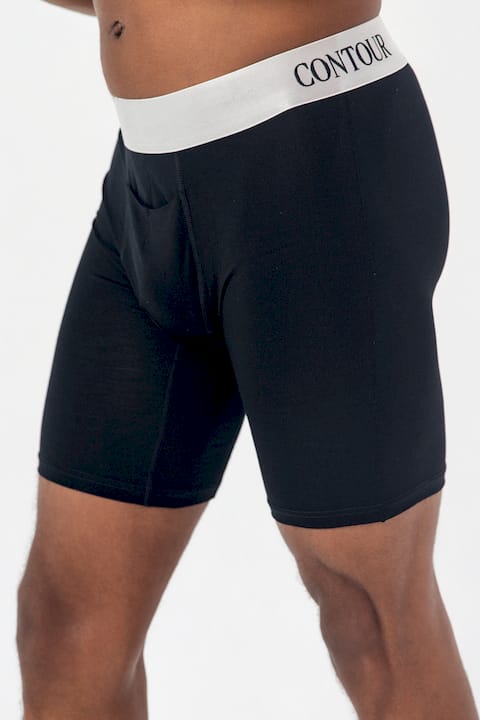
Four-way stretch and recovery are the features that most directly prevent the slow creep toward ride-up and pouch sag over a wearing day. A fabric that stretches in every direction and actually returns to its original shape is doing more work than any amount of clever cutting.
Construction details matter almost as much as the fabric itself:
- Flat, bonded seams reduce chafing points where traditional stitched seams rub against skin.
- A well-engineered waistband holds its shape wash after wash instead of curling or rolling.
- A tagless finish eliminates the one irritation most men never think about until it’s gone.
Care habits extend the life of all of it. Gentle washing and low-heat drying preserve elastic recovery far longer than high-heat cycles, which break down elastane fibers faster than almost anything else in your laundry routine.
How Do You Measure Yourself for the Right Size?
Start with your waist, not your pants size. Wrap a soft tape measure around your natural waistline, roughly at belly button height, and keep it snug but not compressed against your skin. That number, not your jeans size, is what should guide you to a size chart, since dress and jean sizing runs inconsistently across brands.
Follow this sequence when you’re sizing for the first time in a new brand or cut:
- Measure your waist at the natural waistline, standing relaxed, not flexed.
- Check your hip measurement if the brand’s chart lists one separately. Some cuts fit closer to the hip than the waist.
- Match your waist number to the chart, then cross-check the listed inseam range against your height and thigh size.
- When your waist measurement falls between two sizes, size up if you carry more muscle or size in the thighs, and size down if you want a closer, more compressive fit.
- Try the pair on and run the fit tests below before you commit to buying multiples in that size.
The checklist that actually matters before you buy five of the same pair: try one on, sit down, do a squat, and specifically evaluate the pouch and leg openings before deciding the size is right. A waistband that feels good standing in a dressing room can still fail every other test.
Pro Tip: Buy one pair in your calculated size before committing to a multipack. A sizing mistake on one pair costs you $19.99. A sizing mistake on a six-pack costs you a drawer full of underwear you’ll never wear.
What Are the Sit, Squat, and Walk Tests?
Abstract measurements only get you so far. The sit, squat, walk, and 8-hour test tells you more in five minutes than any size chart will.
- Sit test: Sit in a normal chair for two minutes. Pinching at the pouch or waistband digging in means the size is too small; fabric bunching at the thighs means it’s too big or the inseam is too long.
- Squat test: Do a full squat, hold for a few seconds, and stand back up. If the waistband slips down or the leg openings ride up noticeably, the elastic recovery or leg design is failing you.
- Walk test: Walk across the room, climb a few stairs if you can. Chafing at the inner thigh points to a fabric or seam problem, not a size problem.
- 8-hour test: Wear the pair through a full day, ideally with the pants you actually plan to wear over them, since pant fabric and cut change how underwear behaves underneath.
Failure at any stage points to a specific fix: pinching means try a size up or a roomier pouch cut, ride-up means a longer inseam or better stretch fabric, and slippage at the waist means a firmer band or a smaller size. Community discussions on sizing, including threads on Reddit’s malefashionadvice forum, consistently land on the same advice: snug, not tight, and don’t be afraid to try a different cut if your usual size keeps failing you.
Common Boxer Brief Fit Problems and Quick Fixes
Most fit complaints repeat themselves across different men, different brands, and different builds. Here’s what to do about the four that come up most:
- Ride-up and wedgies: Try a longer inseam first, then look for fabric with genuine four-way stretch if the problem persists across sizes.
- Waistband digging in or rolling: A wider waistband usually solves the digging issue; rolling is almost always a sign the size is too big and the elastic has nothing to grip.
- Sagging back panel: Move to a smaller size in that cut, or look for a brand with firmer back panel construction built to resist stretching out.
- Chafing or a compressed feeling: Increase fabric breathability, or size up one notch if the current pair feels tight enough to leave marks by midday.
None of these are complicated fixes. They just require you to identify which zone is actually failing instead of assuming your whole size is wrong.
How the Contour™ Signature Boxer Brief Solves Persistent Fit Problems
If you’ve run the fit tests and still fight ride-up, sagging, or a waistband that won’t stay put, the issue is usually construction, not effort. The Contour™ Signature Boxer Brief is built around a non-rising leg, engineered specifically so the hem stays in place through walking, sitting, and squatting instead of creeping up your thigh throughout the day.
The construction backs up the zone-by-zone logic covered above. The tagless design removes one common irritation at the waistband. The fabric uses four-way stretch designed to hold its shape wash after wash, addressing the elastic recovery problem that causes most ride-up complaints in the first place. Breathable fabric handles the chafing and compression issues that show up during the 8-hour test.
If the sit, squat, and walk tests above kept exposing the same ride-up or fit-retention problems no matter which size you tried, one practical next step is trying a pair in your measured size with the inseam length that matches your thigh proportions. It’s a targeted way to see whether a non-rising leg design actually resolves what standard cuts couldn’t.
Author Perspective and Quick Takeaways
Most fit problems trace back to skipping one of three steps: measure first, test second, choose fabric and cut third. Measure your actual waist, not your jeans size. Run the sit and squat tests before you buy five of anything. Then match the fabric and cut to how you actually spend your day, not how the packaging describes it.
If you’re active, prioritize stretch recovery and a contoured pouch over anything else. If you sit at a desk most of the day, prioritize a wide, soft waistband over aggressive hold. If you’re in a hot climate, breathability solves more problems than a tighter fit ever will.
— Tim
Get a Pair Built Around Everything Covered Here
Everything above points to the same conclusion: most fit problems come down to inseam length, fabric recovery, and waistband construction, not the size number on the tag. That’s the exact combination the Contour™ Signature Boxer Brief was built to solve, with a non-rising leg, tagless waistband, and four-way stretch fabric that holds its shape wash after wash.
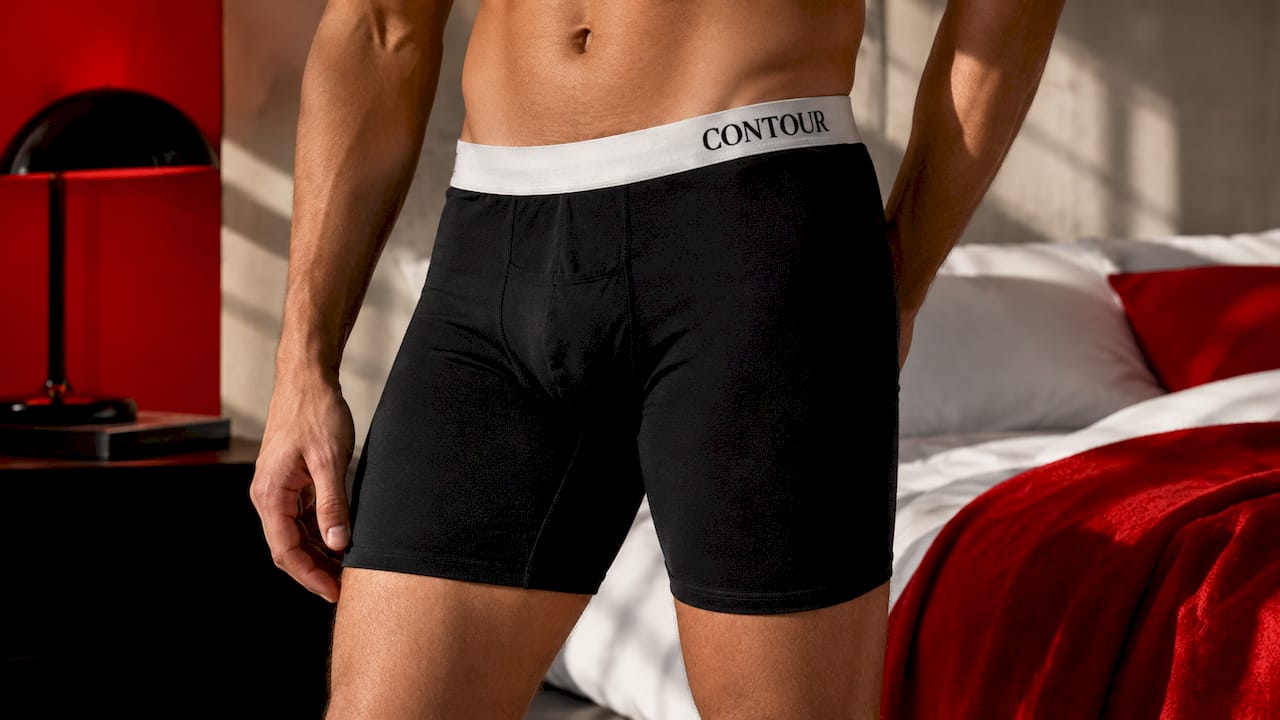
It’s a low-risk way to test whether a non-rising leg design actually fixes the ride-up or pouch problems that standard cuts couldn’t. Measure your waist, check the inseam guidance above against your thigh size, and pick your size on the Wearcontour product page before you order. If you’ve already run the sit and squat tests on your current underwear and found it wanting, this is the next pair worth trying.
Sources
FAQ
Should Boxer Briefs Be Tight or Loose?
Neither. The right fit is snug against the skin without leaving marks or restricting movement, which is why the two-finger waistband test and a quick squat check work better than guessing. If you can see red lines after removing them or the fabric gapes when you move, the fit is off in one direction or the other.
Should I Size Up or Down for Boxer Briefs?
Size up if you carry more muscle or size in the thighs and the pouch or leg openings feel tight during the squat test. Size down if the waistband slips or the overall fit feels loose and unanchored once you’re moving around.
How Do I Tell if My Boxer Briefs Are Too Small?
Red marks left on your skin after several hours, pinching at the pouch, or a waistband that restricts breathing are the clearest signs. Fabric that feels like it’s fighting your body instead of moving with it during the sit or squat test is another reliable signal.
Does Wearing Boxer Briefs Affect Fit Elsewhere?
Yes. A poor-fitting pair changes how pants sit, since bunched fabric or a visible hem line throws off the silhouette of trousers or fitted pants. Getting the underwear fit right, particularly inseam length and waistband placement, is part of getting your outer clothing to sit correctly too.