
Doctor Backed Comfort: Choose Cotton or Polyester Underwear
Engineered polyester earns its place during heavy sweat sessions, long flights, or trips where quick-dry matters more than plush comfort. The Contour™ Signature Boxer Brief fits the daily category: cotton-forward, breathable, and built to hold its shape past the first dozen washes.
TL;DR:
- Cotton underwear generally reduces the risk of skin irritation and bacterial growth due to better breathability and moisture absorption.
- Polyester dries faster, resists shape loss better, and is suitable for travel, workouts, or situations with limited laundry options.
- Blends with a small percentage of elastane improve fit and stretch without significantly altering moisture behavior.
- Regular washing habits, such as avoiding hot water and using microfiber filters, help extend the lifespan of both fabrics.
- Environmental concerns favor organic cotton for reduced pesticide use, but polyester sheds microfibers, posing ecological risks.
Table of Contents
- Cotton vs Polyester Underwear: A Side-by-Side Breakdown
- What Do Doctors Say About Cotton vs Polyester Underwear?
- How Do Fabric and Fit Affect Daily Comfort?
- Durability and Care: How Long Should Underwear Last?
- Environmental Trade-Offs: Microplastics vs Water Use
- Which Fabric Should You Buy for Each Situation?
- Why Wearcontour Builds Around Cotton-Forward Comfort
- Try the Contour™ Signature Boxer Brief for Everyday Comfort
- Sources
- FAQ
Cotton vs Polyester Underwear: A Side-by-Side Breakdown
Choosing between cotton and polyester underwear comes down to seven practical factors, and each fabric wins some and loses others.
Breathability and skin microclimate. Cotton fibers allow more air exchange across the fabric surface, which keeps the enclosed space around your skin, the microclimate, closer to room temperature. Lab data on water vapor transmission shows the gap between cotton and synthetics isn’t huge in a single measurement, but small airflow differences compound over a full day of sitting, walking, and sweating.
Moisture handling. This is where the fibers behave completely differently. Cotton has a moisture regain around 7 to 8.5%, meaning it soaks liquid into the fiber itself. Polyester sits near 0.4% and instead moves moisture along the fiber surface through capillary action, what’s marketed as “wicking.” Cotton feels damp when wet; polyester feels drier but pushes that moisture outward to evaporate.
Skin health and irritation risk. Cotton’s absorbency plus breathability generally means less trapped moisture against sensitive skin, which is why it’s the default clinical recommendation for daily wear.
Durability and shape retention. Polyester generally resists abrasion better than cotton under standardized testing, which tends to reduce stretching, sagging, and fiber breakdown over time.
Care and drying time. Polyester dries in a fraction of the time cotton needs, a real advantage for travelers or anyone doing laundry in a small space.
Environmental footprint. Cotton biodegrades; polyester doesn’t and sheds microfibers when washed. Conventional cotton farming, though, carries a heavy water and pesticide burden of its own.
Price and value. Cotton blends dominate the budget and mid-range market. Performance polyester often costs more upfront but can outlast several cotton replacements.
A few quick takeaways worth remembering:
- Blends with a small percentage of spandex or elastane change fit and stretch without changing the fiber’s core moisture behavior much.
- Antimicrobial or moisture-wicking finishes on either fabric alter performance, sometimes at the cost of a stiffer hand-feel.
- No single fabric wins every category, so match the choice to how you’ll actually use the underwear that day.
What Do Doctors Say About Cotton vs Polyester Underwear?
The skin microclimate, the pocket of warmth and humidity trapped against your body, is the real battleground in this debate. Too much heat and moisture for too long softens skin, disrupts its natural barrier, and creates conditions where bacteria and fungi multiply faster.
The Cleveland Clinic recommends 100% cotton underwear for daily wear specifically because it breathes better and reduces the moisture buildup linked to bacterial and yeast overgrowth. That guidance isn’t a blanket ban on synthetics. Exercise, swimming, and other high-output activities are contexts where a quick-dry synthetic genuinely helps, since staying in sweat-soaked cotton for hours works against the same goal.
Toxicology reviews add a more measured note: chemical finishes on some textiles, cotton and polyester alike, can introduce [dermal irritants] for sensitive individuals(https://doi.org/10.1002/tox.24034), though the evidence doesn’t point to widespread severe harm from normal underwear use. The practical lesson is to watch for unnecessary finishes rather than fear synthetic fiber itself.
A few habits reduce risk regardless of which fabric you choose:
- Change out of sweat-damp underwear as soon as reasonably possible after a workout.
- If you wear synthetic underwear during exercise, a style with a cotton crotch panel cuts infection risk while keeping the moisture-wicking benefit elsewhere.
- Choose a looser fit if you’re prone to chafing or irritation. A tight cut traps heat no matter what it’s made of.
Pro Tip: Keep one pair of quick-dry synthetic underwear in your gym bag or carry-on specifically for workouts and travel days, and default to cotton the rest of the week. You get the best of both without overthinking every laundry cycle.
How Do Fabric and Fit Affect Daily Comfort?
Fiber matters, but fit decides more of your day than most men assume. Cotton’s softer, absorbent hand feels comfortable against skin from the first wear. Polyester’s wicking action clears sweat faster in practice, particularly with mesh panels or ventilated construction that let air actually move.
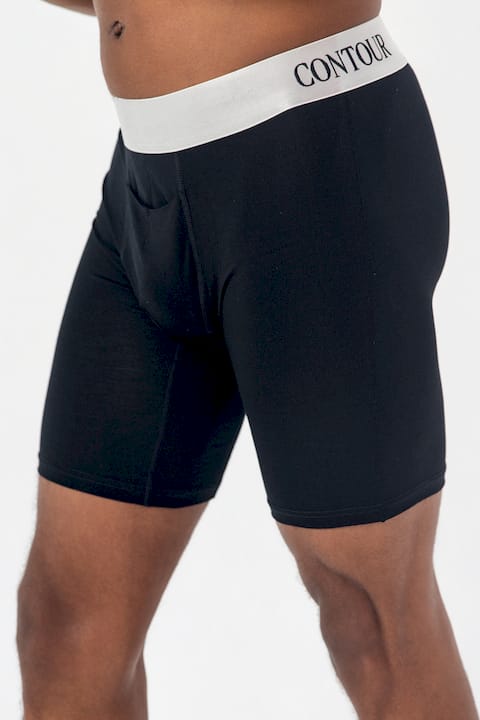
Here’s the part that surprises people: a tight-fitting synthetic pair can trap more heat and moisture than a looser cotton pair, even though polyester technically wicks better on paper. Compression reduces airflow enough to cancel out the fiber’s advantage. Cut and construction change outcomes as much as fabric choice.
That’s the logic behind design details like a non-rising leg and a tagless waistband. Riding fabric and tags rubbing against skin cause friction regardless of what the underwear is made from, and friction is what turns a normal day into a constant series of small adjustments. The Contour™ Signature Boxer Brief pairs a cotton-forward, breathable fabric with a non-rising leg specifically to cut down on that friction.
A few fit rules worth applying:
- Prioritize a relaxed leg opening over a tight one if you sit for long stretches.
- Look for four-way stretch rather than two-way. It moves with you instead of compressing.
- Skip tags and bulky seams near the waistband; they’re a disproportionate source of irritation for their size.
Durability and Care: How Long Should Underwear Last?
Polyester generally holds its shape and elasticity longer than cotton, thanks to higher resistance to abrasion under standardized Martindale testing. Cotton can shrink or fade faster, especially with hot-water washing and machine drying, though tighter-knit cotton constructions resist pilling better than some synthetic blends.
Extending the life of either fabric comes down to a few consistent habits:
- Wash in cold or warm water, never hot, to protect elastic fibers and reduce shrinkage.
- Skip the fabric softener. It coats fibers and reduces the fabric’s natural breathability over time.
- Air dry when possible, or use a low-heat dryer setting to protect elastic waistbands.
- Wash a full load rather than a single pair. It reduces friction damage per garment.
- Rotate at least seven to ten pairs so no single pair gets worn and washed too frequently.
Know when to retire a pair: the waistband has lost its snap-back, the fabric has thinned enough to feel sheer, or odor persists even right out of the wash. Any of those three is your signal to replace, not repair.
Environmental Trade-Offs: Microplastics vs Water Use
Polyester and cotton each carry an environmental cost, just at different points in their life cycle. Every wash cycle sheds synthetic microfibers, and peer-reviewed research confirms these fibers persist in aquatic environments long after they leave your washing machine. Environmental health studies link these textile-derived microplastics to broader ecological and human exposure pathways, which is a real cost polyester carries that cotton doesn’t.
Cotton biodegrades at the end of its life, but conventional cotton farming is notoriously resource-intensive, with a heavy water and pesticide footprint per garment produced. Neither fabric gets a clean bill of environmental health, as they just trade problems.
A few practical steps lower your footprint either way:
- Buy fewer, more durable pairs instead of cycling through cheap ones every year.
- Wash on cold cycles and skip the extra rinse when you can. Fewer wash cycles mean less microfiber shedding.
- Use a microfiber-catching laundry bag or filter if you wash a lot of synthetic clothing.
- Look for organic cotton when budget allows. It cuts pesticide use, though it doesn’t solve water demand entirely.
Which Fabric Should You Buy for Each Situation?
Match the fabric to the activity rather than picking one winner for every day of the week.
- Daily wear: 100% cotton or a cotton-forward blend with breathable construction. This covers the vast majority of a normal week.
- Exercise or heavy sweat: Engineered polyester or a performance blend built for moisture transport, and change out of it promptly once you’re done.
- Travel or limited laundry access: Polyester’s quick-dry advantage pays off here. Pack a rotation of breathable-cut pairs so you’re not stuck rewashing daily.
- Sensitive skin: Minimally finished 100% cotton, ideally undyed or OEKO-TEX Standard 100 certified to reduce exposure to unnecessary chemical finishes.
Why Wearcontour Builds Around Cotton-Forward Comfort
We built our approach around one observation: most friction complaints trace back to fabric that rides, tags that dig in, or fit that fights your body instead of moving with it. That’s why the Contour™ Signature Boxer Brief leans cotton-forward, breathable, and tagless, with a non-rising leg designed to stay put through a full day. If you’re training hard or traveling light, reach for an engineered synthetic instead. For everything else, cotton-forward is where comfort actually lives.
— Tim
Try the Contour™ Signature Boxer Brief for Everyday Comfort
If the case for cotton-forward daily wear made sense to you, the next step is simple: put it on and see how it holds up past week one. The Contour™ Signature Boxer Brief is built with breathable, cotton-forward fabric, a tagless waistband, and a non-rising leg that stays in place instead of bunching by lunchtime. It’s designed to keep its shape and softness through repeated washing.
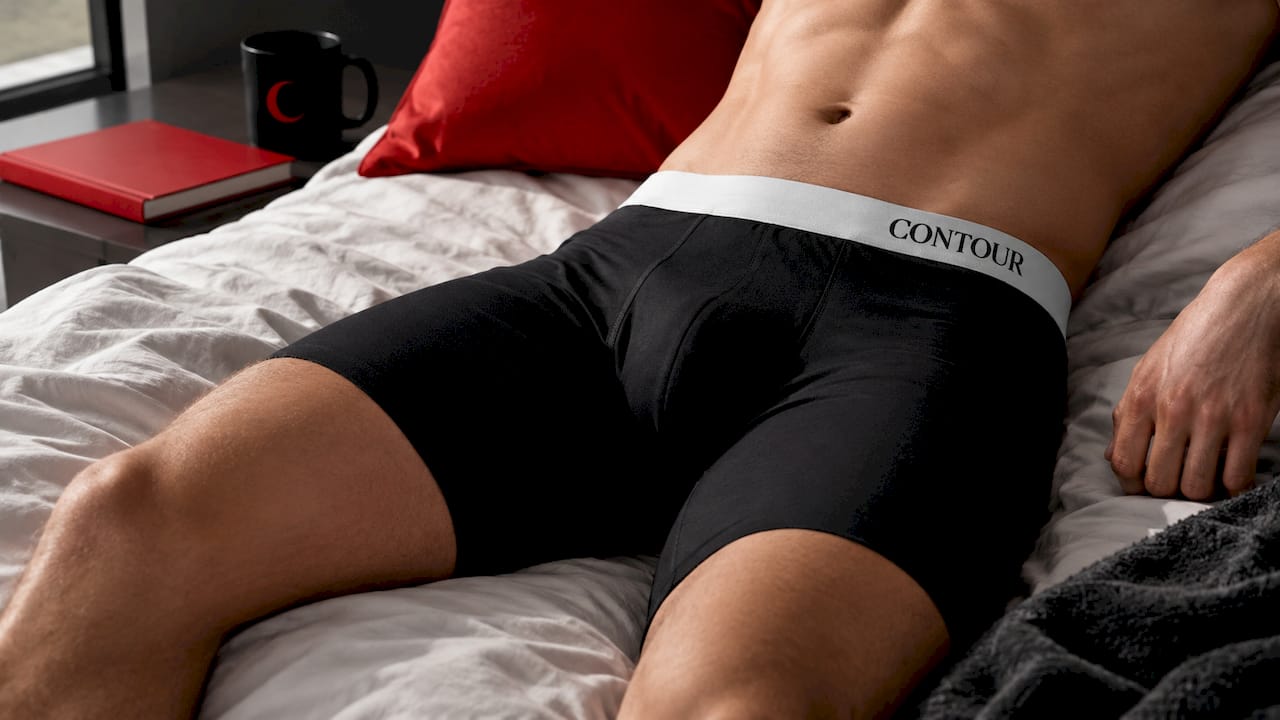
Whether you’re replacing a drawer full of worn-out basics or just want one pair that actually behaves all day, start with a single pair or step up to a multipack bundle for the savings. Shop the Contour™ Signature Boxer Brief and find out what a non-rising leg feels like by hour eight.
This article is general information, not a substitute for advice from a qualified doctor. Consult a qualified healthcare professional about your own circumstances before acting on anything here.
Sources
- How Underwear Impacts Vaginal Health — Cleveland Clinic
- Study on microfiber release and environmental impact (Science of The Total Environment)
- Environmental health study (Environmental International DOI)
FAQ
Should my underwear be cotton or polyester?
Cotton is the better default for everyday wear because it breathes and absorbs moisture, reducing the damp conditions linked to bacterial and yeast growth. Reach for polyester or a performance blend specifically for workouts, swimming, or travel where quick-dry matters more than absorbency.
What underwear do doctors recommend?
Health guidance generally points to 100% cotton for daily wear because of its breathability and lower moisture retention. For active use, doctors often suggest a synthetic with a cotton crotch panel to combine wicking performance with lower infection risk.
What are the disadvantages of polyester underwear?
Polyester traps less moisture-related bacteria than people assume, but it sheds microfibers with every wash that persist as microplastic pollution in waterways. It can also feel less breathable than cotton in a snug fit, since compression cancels out its wicking advantage.
Is a cotton-forward option like the Contour™ Signature Boxer Brief a good daily choice?
Yes. A cotton-forward, breathable fabric paired with a non-rising leg and tagless design targets the two biggest daily complaints, moisture buildup and friction, at once. It fits the everyday-wear category doctors and textile data both favor over synthetics for non-active use.