
6 Factors to Choose Compression Shorts vs Boxer Briefs for Men
Compression shorts win for workouts. Boxer briefs win for everyday life. Use compression shorts when you need muscle support, chafe control, and sweat management during exercise, and switch to boxer briefs for the office, sleep, and casual days when breathability and relaxed comfort matter more. If you only want to own one style, a moisture-wicking boxer brief with a snug, non-rising fit covers both jobs reasonably well.
TL;DR:
- Compression shorts provide graduated pressure for muscle support and chafe prevention during intense exercise, making them ideal for training sessions.
- Boxer briefs are designed for all-day comfort, with softer, breathable fabrics and a fit that stays in place without riding up or causing irritation.
- Synthetic compression fabric manages moisture faster but traps heat over long wear, while boxer briefs made from cotton or microfiber stay cooler during extended daily use.
- Proper sizing is crucial for both styles to prevent discomfort, with compression shorts fitting snugly and boxer briefs avoiding tight leg bands that cause ride-up.
- For versatile wardrobe use, owning both styles and switching based on activity offers the best balance of support, comfort, and durability.
Table of Contents
- Compression Shorts vs Boxer Briefs: The Core Difference
- What Are Compression Shorts and How Do They Work
- What Are Boxer Briefs and Why They Dominate Daily Wear
- Compression Shorts vs Boxer Briefs: A Side-by-Side Look
- When to Wear Each: A Quick Decision Guide
- Downsides, Safety, and Care Tips Worth Knowing
- Where Boxer Briefs Solve the Problems Compression Shorts Can’t
- A Practical Recommendation, Not a Winner-Takes-All Verdict
- Get the Everyday Comfort Compression Shorts Were Never Built For
- Sources
- FAQ
Compression Shorts vs Boxer Briefs: The Core Difference
The real difference between compression shorts and boxer briefs comes down to what they’re built to do to your body, not just how they look. Compression shorts apply graduated pressure to your thighs and glutes using stretch-heavy synthetic fabric. Boxer briefs are built for coverage and comfort, with enough stretch to move but nowhere near the squeeze of a true compression garment. One is athletic equipment. The other is daily-wear underwear. Confusing the two is where most guys go wrong, and it’s why this comparison matters more than it looks like on the surface.
What Are Compression Shorts and How Do They Work
Compression shorts are built from a blend of polyester or nylon with spandex, usually finished with flatlock seams that lie flat against skin instead of rubbing. That fabric combination is what lets them grip your legs firmly instead of just hanging loosely like traditional underwear.
The pressure isn’t just for looks. Compression reduces muscle oscillation, the small, repetitive bouncing that happens with every stride or lift, which is linked to lower perceived muscle fatigue during and after intense exercise. Less bouncing also means less skin-on-skin friction between your thighs, which is the direct cause of chafing.
That same synthetic fabric blend outperforms cotton on moisture management, pulling sweat away from skin instead of holding it there. Since chafing is friction plus moisture, cutting one factor sharply cuts your risk.
Compression shorts work best when they touch skin directly:
- Fabric grips muscle tissue only when there’s no layer between shorts and skin.
- Moisture-wicking only works if sweat has a direct path off your body.
- A base layer underneath defeats both jobs the shorts are designed to do.
Pro Tip: Buy compression shorts true to your waist size, not your usual underwear size. A pair that’s too loose won’t compress anything, and one that’s too tight will pinch instead of support.
What Are Boxer Briefs and Why They Dominate Daily Wear
Boxer briefs are built from cotton, modal, or microfiber blends with a smaller percentage of stretch fiber woven in, enough to move with you but not enough to grip like compression fabric. The fit sits snug through the leg without squeezing muscle tissue, which is the entire point.
That design difference explains why boxer briefs, not compression shorts, dominate closets for office days, travel, and sleep:
- The pouch and leg length are built for coverage and comfort, not performance pressure.
- Softer, breathable fabric feels better against skin for eight-plus hours straight.
- A tagless construction avoids the itch and irritation that scratchy waistband labels cause.
- A non-rising leg design keeps the hem from creeping up your thigh when you sit, walk, or shift position repeatedly through the day.
That last point is the one most brands get wrong. Traditional boxer briefs bunch and ride as the day goes on, forcing constant readjustment. A properly engineered leg band solves that without needing any compression at all.
Compression Shorts vs Boxer Briefs: A Side-by-Side Look
Every decision between these two styles comes down to six practical factors. Here’s how they stack up against each other.
| Factor | Compression Shorts | Boxer Briefs |
|---|---|---|
| Primary purpose | Athletic performance, muscle support | Everyday comfort, all-day wear |
| Material and moisture management | Polyester/nylon plus spandex, high wicking | Cotton, modal, or microfiber blends, moderate wicking |
| Fit and compression level | Firm, graduated compression | Snug but relaxed, minimal compression |
| Chafe prevention and ride-up | Very low ride-up, strong chafe control | Low ride-up with a non-rising design, moderate chafe control |
| Breathability and thermal comfort | Warmer, can trap heat over long wear | Cooler, better for extended daily wear |
| Typical price range | $15 to $40 per pair | $15 to $40 per pair |
Purpose and best use. Compression shorts belong in gyms, on running trails, and under team-sport uniforms. Boxer briefs belong under work clothes, on flights, and in bed. Wearing one for the other’s job is where most complaints about either style actually start.
Moisture-wicking and odor control. Synthetic compression fabric wicks faster and dries quicker than cotton, which matters over a 45-minute run but is overkill for a Tuesday at a desk. Boxer briefs in modal or microfiber blends still manage moisture reasonably well without the tight squeeze.
Support and compression level. Graduated compression is the entire value proposition of compression shorts. It’s also the reason they’re a poor everyday choice; that pressure feels great for 90 minutes of exercise and tiresome after eight hours of sitting.
Chafing prevention and ride-up mechanics. Chafing happens from repetitive friction combined with trapped moisture, according to guidance from the Cleveland Clinic. Compression fabric limits both factors at once. Boxer briefs reduce chafing mainly through fabric softness and a fit that doesn’t shift, rather than through pressure.
Breathability and thermal comfort. Tighter synthetic fabric traps more body heat over long stretches, which is fine for a workout but uncomfortable for a full day indoors. Boxer briefs in breathable cotton or modal blends stay cooler for longer wear.
Price and durability. Both styles land in a similar $15 to $40 range, though quality construction, flatlock seams, non-rising waistbands, reinforced stitching, tends to sit at the higher end of that bracket and lasts through more wash cycles.
When to Wear Each: A Quick Decision Guide
Matching the underwear to the activity solves most of the guesswork. Run through this checklist before you get dressed:
- Running, cycling, or team sports: wear compression shorts directly against skin for muscle support and sweat control.
- Weightlifting or high-intensity training: compression shorts reduce muscle vibration and lower chafe risk during repetitive movement.
- Office days, travel, or sleep: wear boxer briefs for breathability and a relaxed fit you won’t notice by hour six.
- A workout followed by a full day out: change into boxer briefs after training rather than staying in compression fabric all day.
- One pair for both jobs: pick a snug, moisture-wicking boxer brief with a non-rising leg. It won’t compress like true athletic wear, but it handles light activity and daily comfort reasonably well.
Sizing matters as much as style. A compression short that’s too loose won’t do its job, and a boxer brief that’s too tight in the leg band is what causes ride-up in the first place. When in doubt on either style, size up rather than down.
Downsides, Safety, and Care Tips Worth Knowing
Compression shorts have real downsides when worn outside their intended use. Wearing them all day traps heat, and that combination of warmth and tight synthetic fabric against skin can actually raise chafing risk instead of lowering it, especially if you’re not moving enough to keep sweat evaporating. If a waistband leaves a deep, lasting mark or you notice tingling or numbness, the fit is too tight; proper sizing prevents both circulation problems and skin irritation.
- Wash both styles in cold or warm water, never hot, to protect elastic fibers.
- Skip fabric softener; it coats synthetic fibers and blocks moisture-wicking.
- Replace either style once elasticity visibly loosens, usually after 40 to 60 washes for quality synthetic blends.
- Skip underwear under compression shorts. An extra layer blocks the wicking and support the fabric is designed to provide.
- Compression fabric is opaque and fitted, not see-through, so visibility isn’t a real concern for most men.
Pro Tip: If your compression shorts leave your legs feeling numb or your skin discolored after removal, size up. Discomfort is a sizing problem, not something you push through.
Where Boxer Briefs Solve the Problems Compression Shorts Can’t
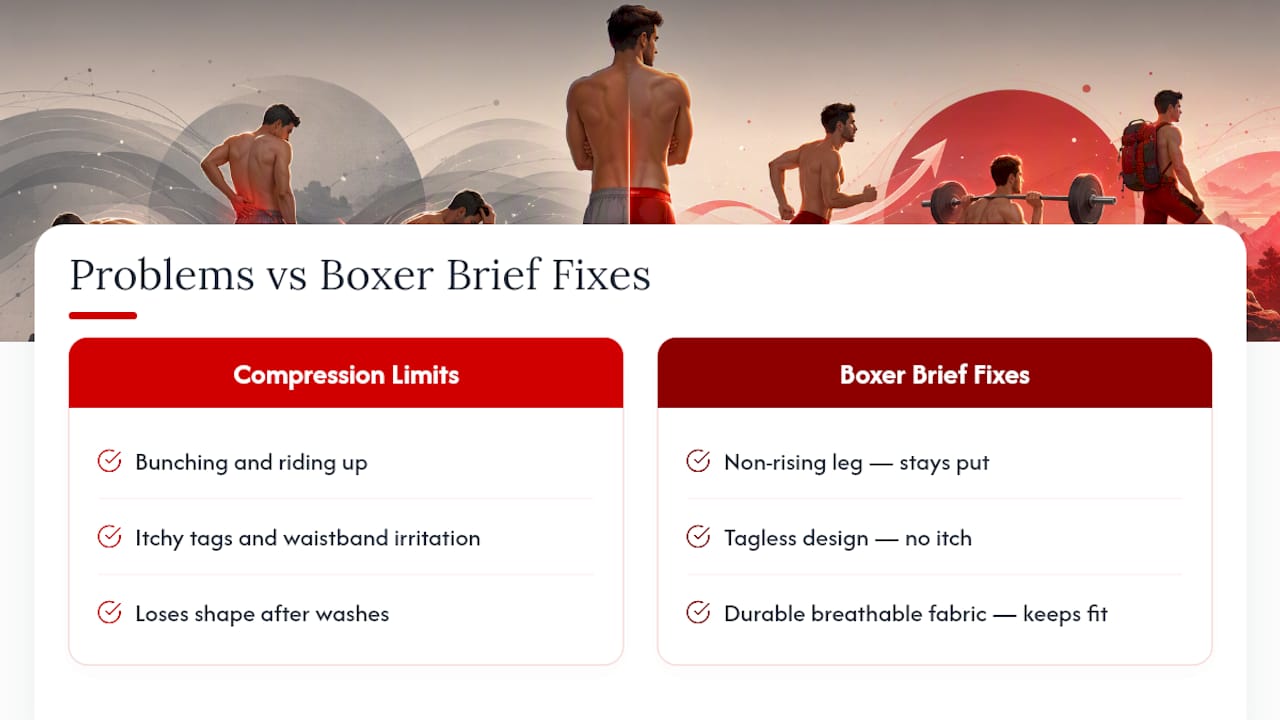
Everyday comfort has its own list of complaints, and none of them get fixed by tighter fabric. Bunching, itchy tags, and underwear that loses its shape after a dozen washes are the three biggest reasons men switch brands. The Contour™ Signature Boxer Brief was built around solving exactly those three problems.
The non-rising leg stays put through sitting, walking, and every position shift in between, so there’s no midday adjustment. The tagless design removes the one thing responsible for most waistband itch. The fabric is breathable enough for a full workday, and it’s built to hold its fit through repeated washing, which is where most everyday underwear quietly fails first.
None of this replaces what compression shorts do for a training session. It’s not meant to. What it solves is the other half of the equation: the 16 hours a day you’re not working out, when comfort and fit consistency matter more than pressure and performance fabric. For the guy who owns compression shorts for the gym and needs something reliable for everything else, that’s the actual gap being filled.
A Practical Recommendation, Not a Winner-Takes-All Verdict
Own both. That’s the honest answer once you strip away brand loyalty and look at what each garment is actually engineered to do. Compression shorts for training sessions, a well-built boxer brief for the other sixteen hours of your day. Rotate based on activity, not habit, size for comfort over compression, and follow basic wash care so either pair actually lasts.
— Tim
Get the Everyday Comfort Compression Shorts Were Never Built For
If you already own a pair of compression shorts for training, the gap in your drawer is everyday underwear that doesn’t bunch, itch, or lose its shape after a few months of washing. That’s the specific problem the Contour™ Signature Boxer Brief is built to close: a non-rising leg that stays put all day, a tagless design with no scratchy waistband label, and breathable fabric that holds its fit wash after wash.
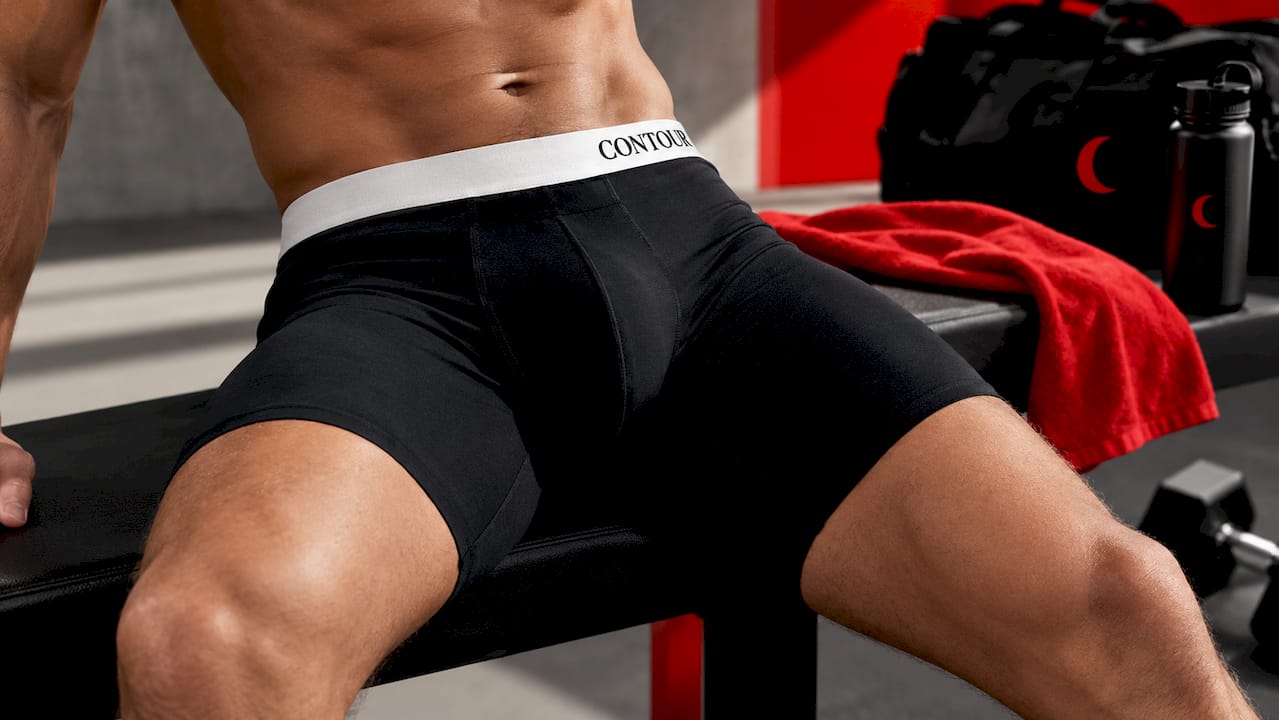
It is sold direct on the Contour™ Signature Boxer Brief site, where you can also find current pricing and shipping details. Check the size guide before you order to get the fit right on the first try, then add it to the rotation alongside your compression shorts for the days you’re not training.
Sources
Claims above draw on chafing guidance from the Cleveland Clinic and Healthline, plus a practical fabric and fit comparison from eathealthy365.
- Cleveland Clinic — Chafing: Causes and Prevention
- The Difference Between Men’s Compression Shorts and Boxers — eathealthy365
FAQ
What Are the Downsides of Wearing Compression Shorts Daily?
Daily wear can trap heat against skin and, if the fit is too tight, cause discomfort or even mild circulation issues; proper sizing is the fix for most of these complaints.
Do You Wear Underwear Under Compression Shorts?
No. Compression shorts are designed to sit directly against skin, and adding underwear underneath blocks their moisture-wicking and muscle-support function.
Do Compression Shorts Show Your Outline More Than Boxer Briefs?
Compression fabric is opaque but fitted, so it shows body shape more clearly than a looser boxer brief; most men find this a non-issue once they’re used to the fit.
Why Do Guys Wear Compression Shorts?
Mainly for reduced muscle vibration, better sweat management, and lower chafing risk during exercise, all tied to the tight synthetic fabric and flatlock seam construction.
Which Is Better, Compression Shorts or Boxer Briefs?
Neither wins outright. Compression shorts are better for workouts and Wearcontour’s boxer briefs, built with a non-rising leg and tagless fit, are better for everyday comfort.