
Men's Comfort: Get 90% Airflow With Boxer Briefs: The One Brief to Try
For most men who want one reliable option for daily wear, boxer briefs beat boxers on comfort, support, and mobility. Boxers still make sense in two specific situations: when maximum airflow matters more than containment, or when fertility is an active concern. The rest comes down to fabric, fit, and what you’re actually doing that day.
TL;DR:
- Boxer briefs provide better support and stay in place during active movements, reducing the need for adjustments all day.
- The key differences in fit stem from waistband height, pouch shape, and leg length, with engineered leg bands preventing ride-up.
- Moisture-wicking fabrics like modal or synthetic blends improve comfort and shape retention, especially in hot or humid environments.
- For fertility concerns, choosing loose, breathable underwear made from natural or moisture-wicking fabrics may help maintain optimal testicular temperature.
- Testing both styles for a week can help determine personal preference, focusing on containment versus freedom of movement.
Table of Contents
- Boxers vs Boxer Briefs: Quick Comparison
- How Do Fit and Support Actually Differ?
- Which Fabric Actually Keeps You Comfortable?
- What Should You Wear for Sleep, Work, or the Gym?
- Does Underwear Choice Affect Fertility?
- How Do You Choose the Right Fit?
- How Do You Keep Underwear Lasting Longer?
- How the Contour™ Signature Boxer Brief Meets These Standards
- A Trade-Off Worth Testing Yourself
- Ready to Try the Everyday Boxer Brief?
- Sources
- FAQ
Boxers vs Boxer Briefs: Quick Comparison
The short version: boxer briefs cover more bases, but boxers have a real edge in two categories. Here’s how the two cuts stack up on the factors that actually change how your underwear feels by 2 p.m.
- Comfort: Boxer briefs win for daily wear because they stay put; boxers win for sleep and lounging because they don’t touch the thigh at all.
- Support: Boxer briefs offer noticeably more containment thanks to a longer leg panel and a pouch built into the fit, not just draped fabric.
- Breathability: Boxers usually breathe better since there’s more open space and less fabric contact with skin.
- Mobility and ride-up: Boxer briefs with an engineered leg band resist bunching during walking, squatting, or sitting for long stretches; loose boxers can shift and require adjustment.
- Best use cases: Boxer briefs for work, workouts, and travel; boxers for sleeping, hot weather, and low-activity days.
Choose boxers if breathability or fertility timing matters more to you than a locked-in fit. Choose boxer briefs if you want one style that works under jeans, suits, and gym shorts without adjustment. For that second group, the Contour™ Signature Boxer Brief is built around exactly this use case, with a leg band designed not to ride up during a normal day.
How Do Fit and Support Actually Differ?
The difference between boxers and boxer briefs comes down to three construction details: waistband height, pouch shape, and leg length. Boxers use a loose-cut leg with an open weave and no fitted pouch, so the fabric hangs rather than holds. Boxer briefs extend partway down the thigh with a closer, often four-way stretch fabric and a shaped pouch that keeps everything in one place instead of shifting with movement, a design Wikipedia’s overview of the style traces back to a merger of brief-style support with boxer-style coverage.
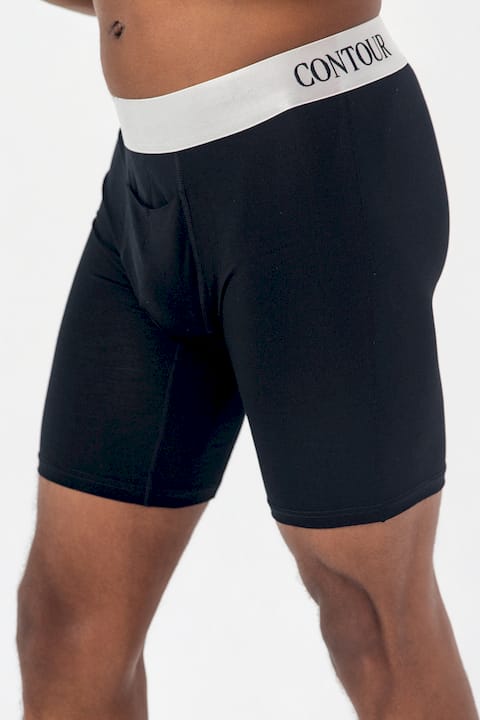
Ride-up happens when the leg band’s elasticity doesn’t match your thigh circumference, combined with how much friction the fabric creates against skin. A loose boxer leg has nothing anchoring it, so it climbs as you move. Boxer briefs with a leg band engineered to match common thigh sizes grip enough to stay in place without cutting off circulation, which is the whole point of a well built leg band: less mid-day adjusting, less bunching under fitted pants.
This matters more than most guides admit once you factor in clothing. Under slim jeans or dress pants, loose boxer fabric can bunch and create visible lines you’ll feel all day. Under a suit, the same problem shows up as fabric shifting when you sit down for a meeting. Athletic shorts are more forgiving either way, but even there, a boxer brief’s built-in support reduces the need for a separate compression layer. Gear Patrol’s comparison of the two cuts makes the same case: boxer briefs earn their reputation as the all-around choice because they solve the coverage-versus-support trade-off that boxers and briefs each only partly address.
Which Fabric Actually Keeps You Comfortable?
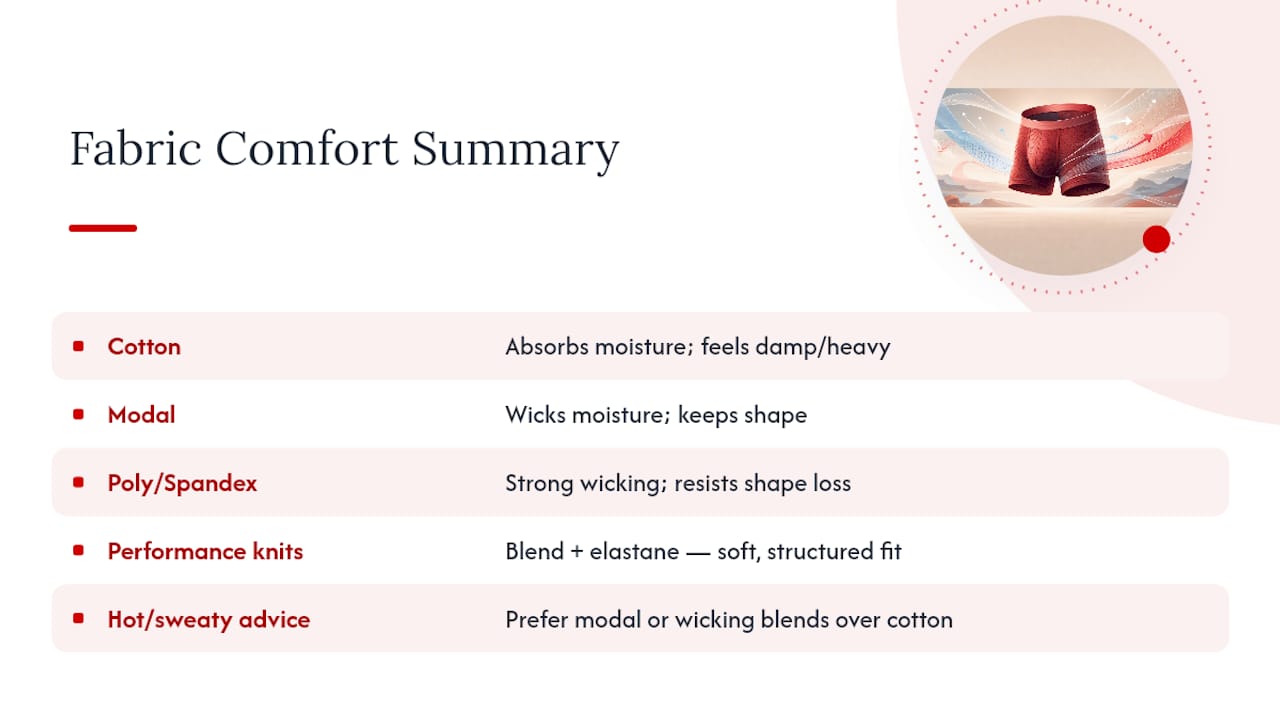
Cut decides fit, but fabric decides how the day actually feels. Cotton is soft and familiar, but it absorbs moisture rather than moving it away from skin, which means it can feel damp and heavy during a sweaty commute or a workout. Modal fabric handles moisture better, holds its shape through repeated washing, and has a smoother hand feel against skin than plain cotton. Polyester and spandex blends push moisture-wicking even further and resist shape loss, though cheap versions can feel plasticky or trap heat if the weave is too tight.
Performance knits built specifically for underwear, usually a modal or cotton blend with a small percentage of elastane, tend to split the difference: soft enough for daily wear, structured enough to hold a fitted leg band in place through a full day. Fabric blends generally matter as much as the cut itself for how underwear performs, since a great cut in a poor fabric still bunches, sags, or overheats.
If you sweat heavily or live somewhere hot and humid, prioritize a modal or moisture-wicking synthetic blend over heavyweight cotton. Heavy cotton feels great out of the dryer but gets clingy fast once it picks up moisture, and it loses shape faster with repeated washing than a stretch blend does. That’s true whether you land on boxers or boxer briefs. The fabric issue is separate from the cut issue, and treating them as one decision is where a lot of guys get their underwear choice wrong.
What Should You Wear for Sleep, Work, or the Gym?
Matching underwear to activity is simpler than most guides make it sound, but the mismatches are common enough to call out directly.
- Sleep and lounging: Boxers or loose-fit boxer briefs work best since there’s no fitted clothing layer to worry about and airflow matters more than containment overnight.
- Office and everyday wear: Boxer briefs are the better call under fitted pants or suits because a non-rising leg band means zero adjusting during meetings or commutes.
- Gym and workouts: Boxer briefs with moisture-wicking fabric outperform boxers here since movement is exactly when loose fabric bunches and rides up.
- Travel: A modal or synthetic-blend boxer brief handles long flights and inconsistent laundry access better than cotton boxers, which lose freshness faster.
- Hot, humid climates: Lightweight boxers win on pure airflow, but a breathable boxer brief blend gets you 90% of that comfort with better support.
The pattern across all five: fitted clothing and high movement favor boxer briefs, while low-movement, low-friction situations favor boxers. Once you know which category your day falls into, the choice mostly makes itself.
Does Underwear Choice Affect Fertility?
A widely cited Harvard Gazette summary reports that men who wore tighter underwear made from synthetic materials showed lower sperm counts in some cases, with decreases reported up to around 25% compared with looser styles. The mechanism is thermal: tight, non-breathable fabric traps heat close to the body, and the testes function best a few degrees cooler than core body temperature. Synthetic fabric that doesn’t breathe well compounds the effect by holding in both heat and moisture.
This doesn’t mean every man in briefs faces a fertility problem, and the research doesn’t establish that boxer briefs carry the same risk as tight synthetic briefs specifically. But if you’re trying to conceive with a partner, switching to a looser, more breathable cut for a few months is a low-cost, fully reversible change worth making. Prioritize natural or moisture-wicking blends over tight synthetics, especially overnight, and treat it as one small adjustment among several rather than a guaranteed fix.
How Do You Choose the Right Fit?
Getting the fit right takes less guesswork than most first-time buyers assume, if you check the right things before or right after you buy.
- Measure your waist and upper thigh. Compare against the brand’s size chart rather than guessing from your pants size, since underwear sizing often runs differently.
- Check the waistband feel. It should sit flat without digging in or rolling, even after sitting for an hour.
- Test the pouch fit. There should be enough room for support without excess bunching fabric.
- Do a mobility check. Squat, walk, and sit in the underwear before deciding if it’s a keeper; ride-up shows up fastest during movement, not while standing still.
- Read the product page for fabric percentages, return policy, and care instructions before buying multiples of one style.
Pro Tip: Buy one of a new style before committing to a multipack. Fit and fabric feel different after the first wash than they do fresh off the shelf, and a single test pair saves you from a drawer full of underwear you don’t reach for.
How Do You Keep Underwear Lasting Longer?
Wash in cold or warm water rather than hot, and skip fabric softener, which coats elastic fibers and speeds up leg-band breakdown. Air-drying instead of machine-drying on high heat preserves elastane longer, since repeated high heat is one of the fastest ways to wear out a leg band. Turn dark colors inside out to slow fading. Replace a pair once the waistband loses its snap, the leg band stops gripping and starts riding up no matter what you wear, or the fabric thins enough to feel see-through.
How the Contour™ Signature Boxer Brief Meets These Standards
Every criterion above, non-rising leg, breathable stretch fabric, a fit that holds through movement, is what the Contour™ Signature Boxer Brief is built around. The tagless design removes one common irritation point, and the four-way stretch fabric is meant to move with you rather than resist you, which is the same ride-up problem this article keeps coming back to. It’s engineered to hold its shape and softness through repeated washing rather than breaking down after a month of regular wear.
A Trade-Off Worth Testing Yourself
Boxers give you freedom; boxer briefs give you containment. Which one you value more is personal, and it usually only becomes clear after wearing both for a week. If you’re stuck between them, buy a small pack of each and pay attention to which one you reach for by day five.
— Tim
Ready to Try the Everyday Boxer Brief?
You’ve seen the case for boxer briefs as the daily default: better containment, less ride-up, and fabric that holds up under fitted clothing where boxers tend to fall short. The Contour™ Signature Boxer Brief is built specifically around the non-rising leg band and breathable stretch fabric this article recommends checking for.
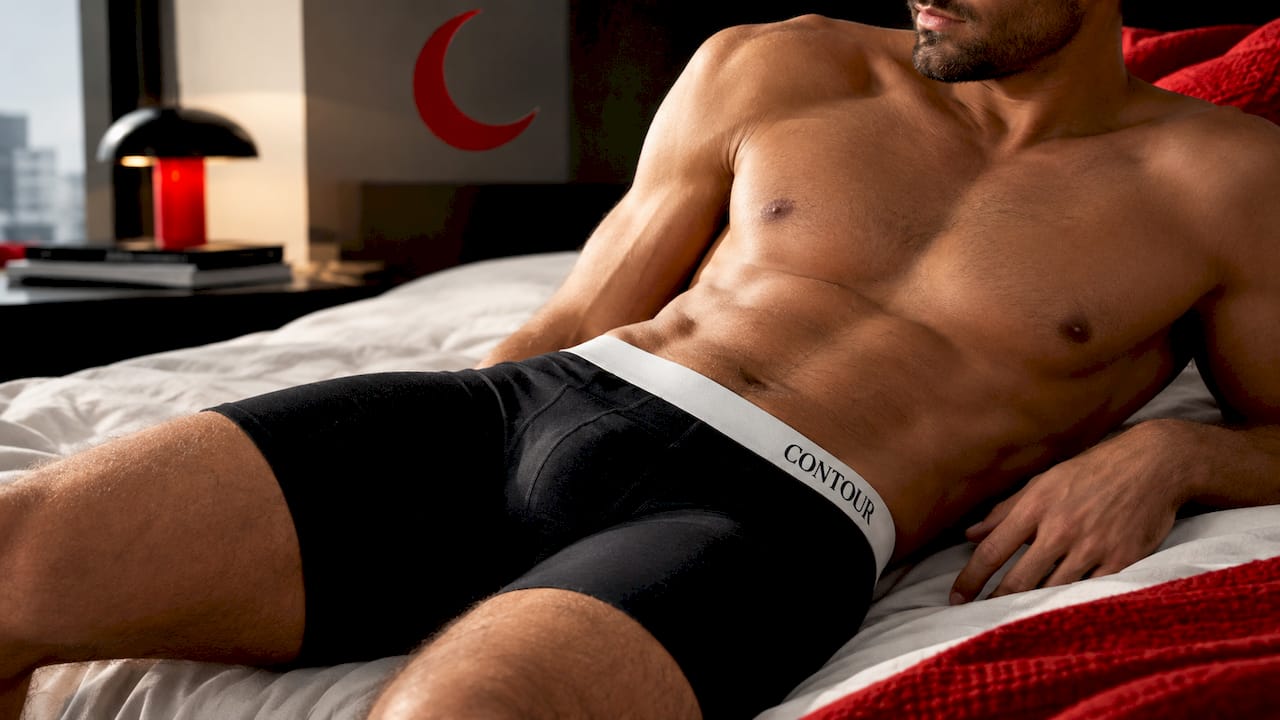
It comes in multiple sizes with a size chart to match against your own waist and thigh measurements, plus multipack bundles if you already know it’s your fit. Check the product page for current return policy details before you order, then place your first order and see how it holds up after a week of real wear.
Sources
- Boxers or briefs? Prospective dads have an easy choice | Harvard Gazette
- Boxer briefs vs. boxers: what to choose | Gear Patrol
- Boxer briefs — Wikipedia
FAQ
What do the British call a bra?
This question is unrelated to men’s underwear terminology; in British English, “bra” is used the same as in American English, with “brassiere” as the more formal, less common term.
Do more women prefer boxers or boxer briefs on their partners?
Preference varies by individual, and no reliable research tracks this at scale, but boxer briefs are often favored in casual polling because they show more fitted shape without the bagginess of loose boxers.
Why do some guys prefer boxers over briefs?
Boxers appeal to men who prioritize airflow and freedom of movement over containment, and some men find boxers more comfortable for sleep or hot weather since there’s no fitted leg band or pouch pressing against skin.
Is it a good idea to switch from boxers to briefs or boxer briefs?
Switching is worth trying if you struggle with ride-up or want more support under fitted clothing; expect a short adjustment period as the fabric and waistband settle against your body over the first few wears.
Does wearing boxer briefs affect fertility the same way tight briefs might?
The Harvard-cited research links fertility risk specifically to tight underwear made from non-breathable synthetic materials, not to boxer briefs generally, so a breathable, properly fitted boxer brief generally carries less of that thermal concern than a tight, non-breathable brief.