
Men: Measure Your Inseam, Then Try the Contour™ Boxer Brief
The right inseam depends on what you’re trying to solve. Pick around 2 to 3 inches for minimal, brief-style coverage, 4 to 6 inches for the everyday balance most men wear, and 7 inches or more if thigh chafe is your main complaint. Match that range to your activity level and thigh size, then confirm it against a pair you already know fits well before you buy.
TL;DR:
- An inseam measurement accurately reflects where the fabric ends on your thigh and varies by activity, body type, and personal preference.
- Typical inseams range from 3 to 9 inches, with 4 to 6 inches being standard for most men and 7 inches or more suited for thigh chafe concerns.
- Measuring your inseam involves either measuring your own inner leg from the crotch to your desired length or copying a trusted pair’s inseam with careful attention to the inner seam.
- For daily activities, a 4 to 6 inch inseam works well for seated tasks, while 6 to 7 inches is better for movement-heavy routines like running or lifting.
- Inseam length is less impactful than construction details like stretch, seam placement, and leg panel design, which influence how well the boxer briefs stay in place throughout the day.
Table of Contents
- What Does “Inseam” Mean on Boxer Briefs?
- How Do You Measure Your Inseam Accurately?
- Which Inseam Works Best for Your Activity and Body Type
- Fabric, Cut, and Construction Matter as Much as Length
- Size Guide Tips and Common Fit Mistakes
- How I Pick an Inseam for Everyday Wear
- Solving Ride-Up With the Contour™ Signature Boxer Brief
- Sources
- FAQ
What Does “Inseam” Mean on Boxer Briefs?
Inseam is the distance from the crotch seam, sometimes called the crotch apex, down to the bottom hem of the leg. It’s the single measurement that tells you where the fabric actually stops on your thigh, and it’s the number that separates a brief-cut boxer brief from a long-leg one.
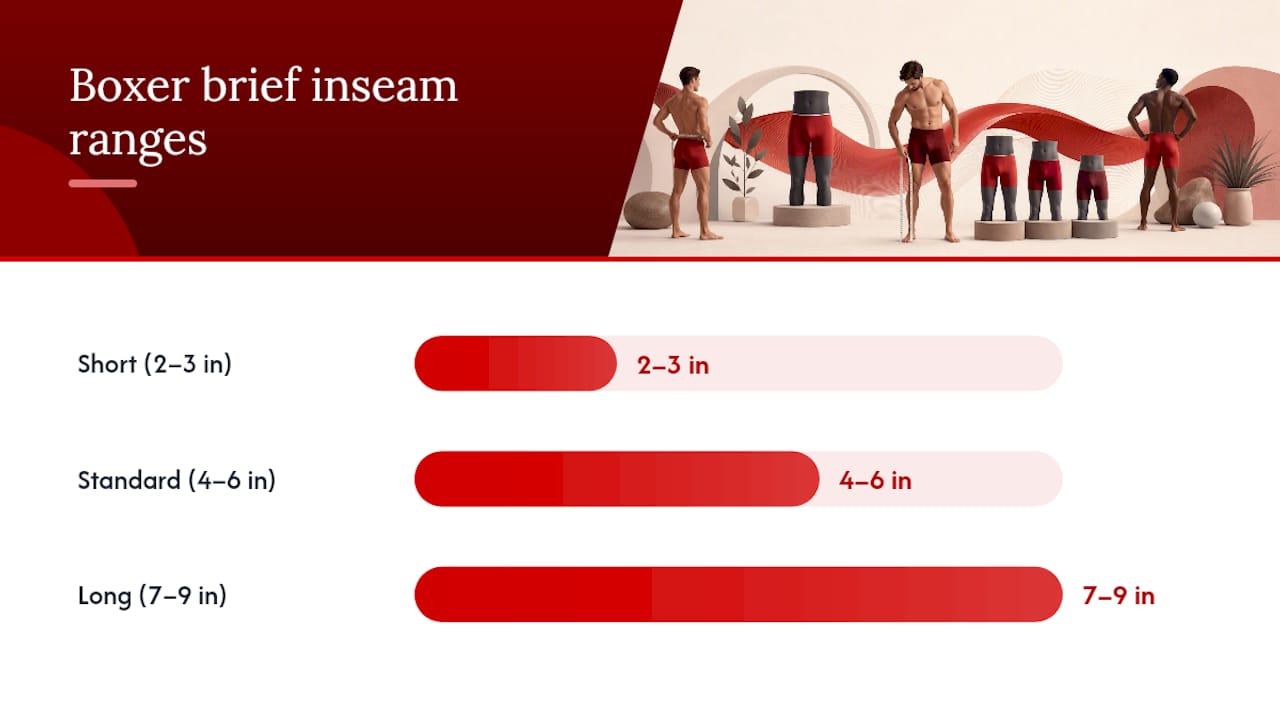
Boxer briefs as a category run a wide range. Typical inseams span roughly 3 to 9 inches, with 5 to 6 inches acting as the common everyday standard. That middle zone exists because it hits mid-thigh, which is short enough to wear under slim pants without printing through the fabric, but long enough to prevent the fabric from riding up when you sit or walk.
Here’s how the three main buckets break down in practice:
- 2 to 3 inches: Barely covers past the hip, closer to a brief with a boxer-brief waistband. Works under athletic shorts or when you want zero visible leg line under fitted clothing.
- 4 to 6 inches: The standard range. Many brands, including Mack Weldon’s size guide, treat 5 inches as their baseline because it clears the top of the thigh without bunching under slim chinos or dress pants.
- 7 to 9 inches: Long-leg territory. Lands closer to mid-thigh or lower and is the go-to length for anyone whose thighs rub together during the day.
A 5-inch boxer brief from one brand won’t always match a 5-inch pair from another. Fabric weight, waistband height, and how the pattern is cut all shift where that hem actually sits on your leg. That’s why the number on a product page is a starting point, not a guarantee.
How Do You Measure Your Inseam Accurately?
Get this measurement wrong and every other decision, activity, thigh coverage, chafe prevention, falls apart with it. Two methods work: measuring your own body, or measuring a pair of underwear you already trust.
On-body measurement:
- Stand naturally and locate your crotch apex, where the inner leg seams would meet if you were wearing fitted underwear.
- Decide how far down your thigh you want coverage to end.
- Measure straight down the inner leg from that point to your target hem line using a soft tape measure.
- Repeat once more to confirm the number before you shop.
Measuring a garment you already own:
Lay your favorite pair flat, then measure from the base of the crotch seam to the bottom of the leg hem. Measurement guides recommend this exact approach because it’s the fastest way to translate “the pair that already fits” into a number you can compare against a product listing.
The most common mistake is measuring the outer seam instead of the inner one, which inflates the number and leads you to buy shorter than you meant to. The second mistake is measuring fabric flat without accounting for stretch. A garment laid on a table doesn’t show how far four-way stretch fabric will actually extend once it’s on your body, so a flat-measured inseam can read shorter than what you’ll experience wearing it.
Pro Tip: If your flat measurement lands between two sizes, size up on the waist before you size up on the inseam. A looser waistband causes more bunching than an extra half inch of leg length ever will.
Which Inseam Works Best for Your Activity and Body Type
Your daily routine matters more than your general size when you’re picking a length. A few rules hold up across most body types and situations:
- Desk work and commuting: A 4 to 6 inch inseam clears the top of the thigh cleanly under slim trousers and won’t bunch when you’re seated for hours.
- Running or lifting: Movement multiplies friction. A 6 to 7 inch inseam gives repetitive motion more room to breathe without the fabric climbing.
- Fuller thighs or a history of chafing: Longer 7-inch inseams are commonly recommended specifically because more surface coverage reduces skin-on-skin contact where thighs are closer together.
- Wearing shorts or gym gear: Match the boxer brief’s hem to sit above the shorts’ hem, or close to it, so you don’t get a visible line or bunching at the leg opening.
- Chinos or tailored pants: Stick to 5 inches or under. Anything longer risks showing through slim-fit fabric, especially in lighter colors.
Men with more muscular or fuller thighs typically need at least 5 inches to avoid the fabric creeping upward by midday. That’s not a universal rule, but it’s a reliable floor. If you’ve never given yourself a long-leg option and you deal with chafing on hot days or long walks, that’s usually the first fix worth trying before you assume it’s a fabric problem.
Fabric, Cut, and Construction Matter as Much as Length
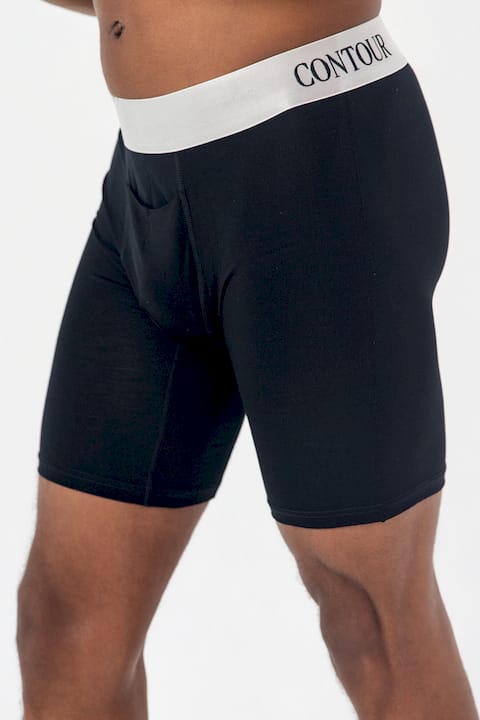
Length gets all the attention, but a well-cut 5-inch brief can outperform a poorly cut 7-inch one. The leg panel shape, seam placement, and fabric stretch determine whether that hem actually stays put or crawls up your thigh within an hour.
A few construction details do most of the work:
- Stretch and recovery: Elastane blended into the fabric lets the leg opening flex with movement and then snap back into place, instead of stretching out and staying loose.
- Leg opening finish: A tapered, flatlock-seamed opening distributes tension evenly around the thigh rather than digging in at one point, which is usually what triggers the fabric to roll.
- Seam placement: Seams positioned away from high-friction zones reduce chafing regardless of inseam length.
- Non-rising leg design: A properly shaped leg panel resists the upward crawl that makes most men reach down and readjust throughout the day. Wear Contour built the Contour™ Signature Boxer Brief around this exact idea, pairing a non-rising leg with a tagless waistband so there’s no tag digging in and no seam catching as you move.
Pro Tip: If you’re choosing between two similar inseams, pick the one with a tapered leg opening and flatlock seams. That construction detail prevents more ride-up than an extra inch of fabric ever does.
Size Guide Tips and Common Fit Mistakes
Every brand lists inseam a little differently, which makes brand-to-brand comparisons trickier than they should be. Cross-check any listed inseam against a pair you already own and trust, rather than assuming a “5-inch” label means the same thing everywhere.
A few habits will save you a return shipment:
- Compare, don’t guess: Use your own flat-measured favorite as the benchmark before trusting a new brand’s number.
- Size up for comfort, size down for support: If you want a relaxed, all-day feel, round up on the waist. If you want snug athletic support during workouts, stay true to size or slightly under.
- Check the fabric’s stretch claim: A high-stretch fabric with strong recovery holds its shape through repeated washing better than a low-stretch blend, which matters more than the inseam number after twenty wash cycles.
- Read the return policy first: Since inseam interpretation varies by brand, confirm shipping and return terms before you order multiple sizes to test.
- Use a published size guide: A size guide that lists actual garment measurements, not just S/M/L labels, gives you a far more reliable comparison point than sizing by letter alone.
How I Pick an Inseam for Everyday Wear
I default to a 5-inch inseam for most of the week and switch to 7 inches on days I know I’ll be walking a lot or working out. That split covers both slim pants and long stretches on my feet without compromise.
The at-home test I trust: wear a new pair for a full day of normal movement, sitting, walking, climbing stairs, and check by evening whether the hem has crept upward. If it has, the construction, not just the length, is the problem. Wear Contour’s size guide is worth checking before you buy, since matching your measurement to their chart beats guessing from the letter size alone.
— Tim
Solving Ride-Up With the Contour™ Signature Boxer Brief
If you’ve measured your inseam and still deal with fabric that creeps up by early afternoon, the problem usually isn’t length. It’s construction. The Contour™ Signature Boxer Brief is built around a non-rising leg panel designed specifically to stay in place through sitting, walking, and everything in between, paired with a tagless waistband so there’s nothing digging in by hour six.
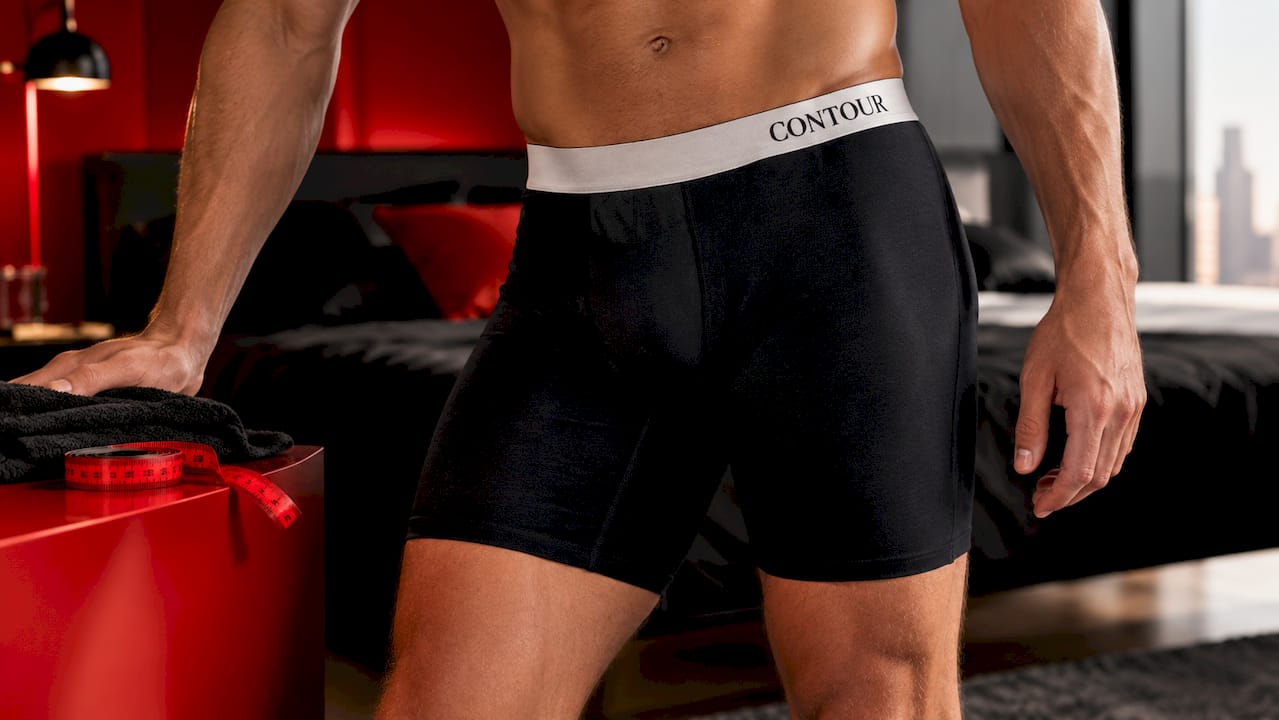
The fabric is a breathable, four-way stretch blend designed to maintain its fit through repeated washing, so the fit you get initially should be similar over time. If you’ve already measured a favorite pair using the steps above, compare that number against the Contour™ Signature Boxer Brief sizing chart and order the size that matches. That single comparison is the fastest way to know if a construction upgrade, not just a longer inseam, is what actually fixes your daily discomfort.
Sources
- Boxer briefs - Wikipedia
- Carhartt Force® 5" Tech Boxer Briefs | Carhartt
- Baller Fly 7" Black — Woxer
FAQ
What Is the Normal Length of Boxer Briefs?
Most everyday boxer briefs run a 5 to 6 inch inseam, which lands at mid-thigh and works under most pants without printing through the fabric. Some brands go as short as 3 inches or as long as 9 inches depending on the intended use.
What Are the Differences Between 3-Inch and 5-Inch Inseam Boxer Briefs?
A 3-inch inseam sits close to a brief cut, covering minimal thigh area and working best under athletic shorts or fitted clothing. A 5-inch inseam covers more of the upper thigh, reducing chafe risk and staying hidden under slim pants and chinos.
What Do the British Call a Bra?
In British English, a bra is typically called a “bra” as well, though it’s occasionally referred to informally as a “brassiere,” the older formal term the word is shortened from.
What Is the Best Testicle Support in Underwear?
Support comes down to a supportive pouch design and a fabric with strong stretch and recovery, rather than inseam length alone. A boxer brief with four-way stretch and a well-contoured pouch typically offers more consistent support than a standard brief.
How Do I Know if I Need a Longer Inseam?
If you notice thigh chafing, fabric riding up by midday, or you have fuller thighs, a 7-inch or longer inseam usually solves the issue better than a shorter cut. Comparing a new pair against a well-fitting favorite, as outlined in the measurement steps above, confirms whether length or construction is the real fix.